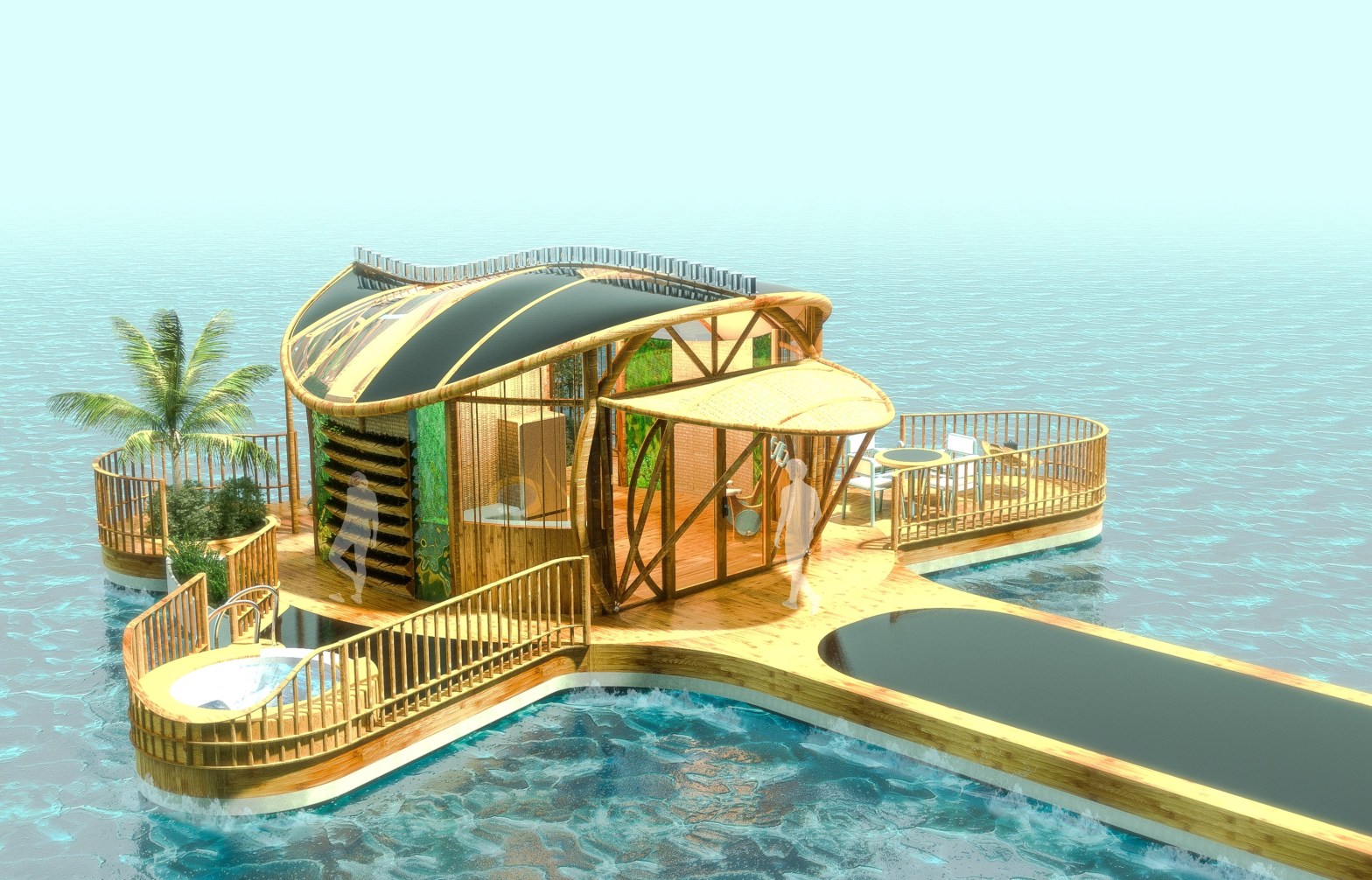
Honu is a new species of self-sufficient floating house, providing sustainable solutions to energy, water, rising sea levels, and loss of ecosystems. Each structural element has an added function to help solve each of these problems: the use of sustainable, and low carbon footprint materials; the integration of renewable energies in roofs, floors, facades, or furniture; green spaces; and a floating platform to resist the effects of the rising sea levels.
Welcome to HONU
Welcome to Honu, a new model of innovative eco-home. Land and sea, tradition and vanguard, nature and technology, design and sustainability merge to create one of the most self-sufficient houses to date.
Honu is designed to help solve the Earth’s current environmental problems: pollution, plastics in the ocean, loss of ecosystems, urban overcrowding, climate change, and rising sea levels.
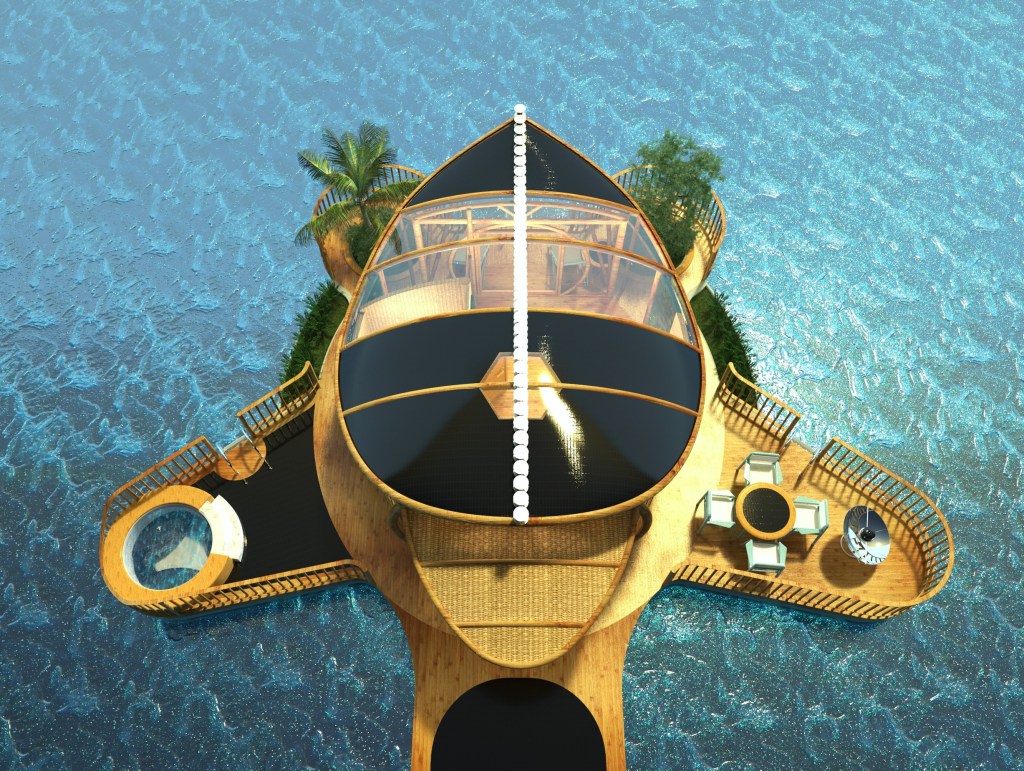
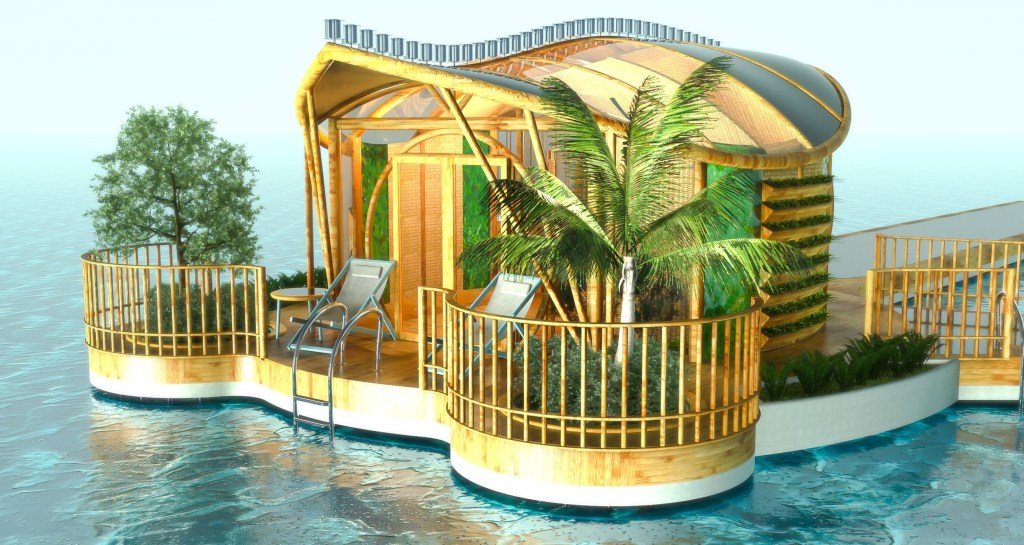
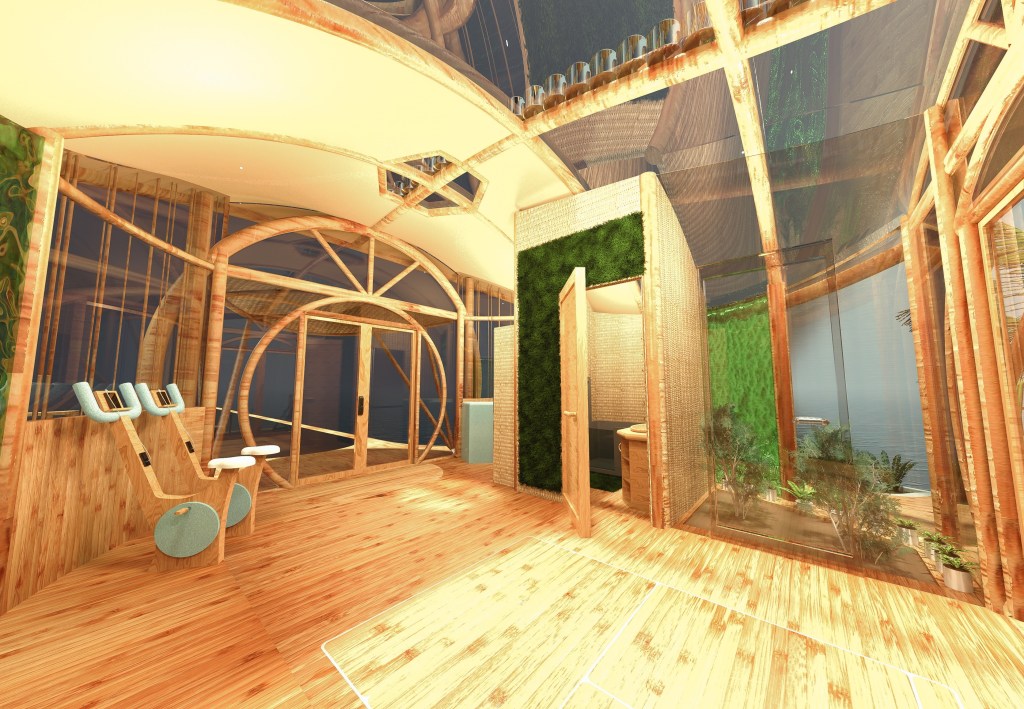
The design of the architecture and furniture integrate technology to generate electricity from the sun, wind, algae, water, and human workout.
They are also made of sustainable materials from land (bamboo, moss, or mushrooms) and sea (recycled ocean plastics or algae bio panels).
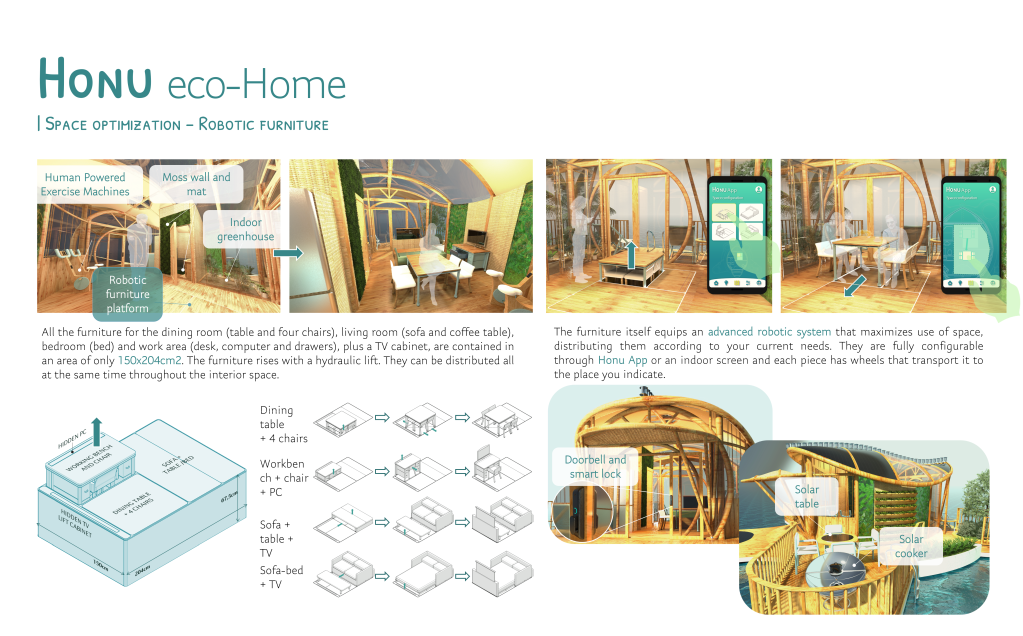
The furniture equips an advanced robotic system that maximizes the use of space, distributing it according to your current needs. Fully configurable through an app, which also allows control of the rest of the smart devices such as lights and thermostats, and to share access. Honu produces clean water from rain and sea; food from vertical farms and an indoor greenhouse; and provides waste management.
And besides all that, Honu is a floating house with a platform to resist the effects of the rising sea levels. Meet this new self-sufficient eco-creation.
The Problem(s)
Pollution: is a major concern due to its impacts on human health and our environment. Electricity production and construction are among the largest contributors to CO2 emissions. Around 83% of emissions in construction is contributed by the production phase.
Plastics in the ocean: can cause the death of animals, destroy habitats and contaminate our food. Every year, millions of plastic enter the oceans and 50% of ocean plastic is fishing nets.
Loss of ecosystems: one example, according to WWF, more than 250,000 turtles die after getting caught in fishing nets.
Urban overcrowding: there are already 8 billion people living on the planet and the overpopulation of cities is a real issue in terms of managing resources and lack of green spaces.
Climate change and rising sea levels: climate change and major storms cause flooding in homes and cities. According to the European Environment Agency, the global mean sea level has risen about 21 cm since 1900, at an accelerating rate.
The Solution(s)
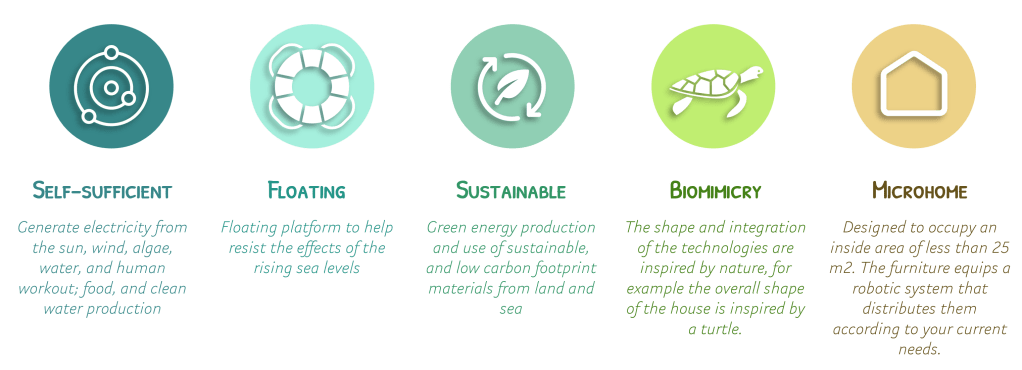
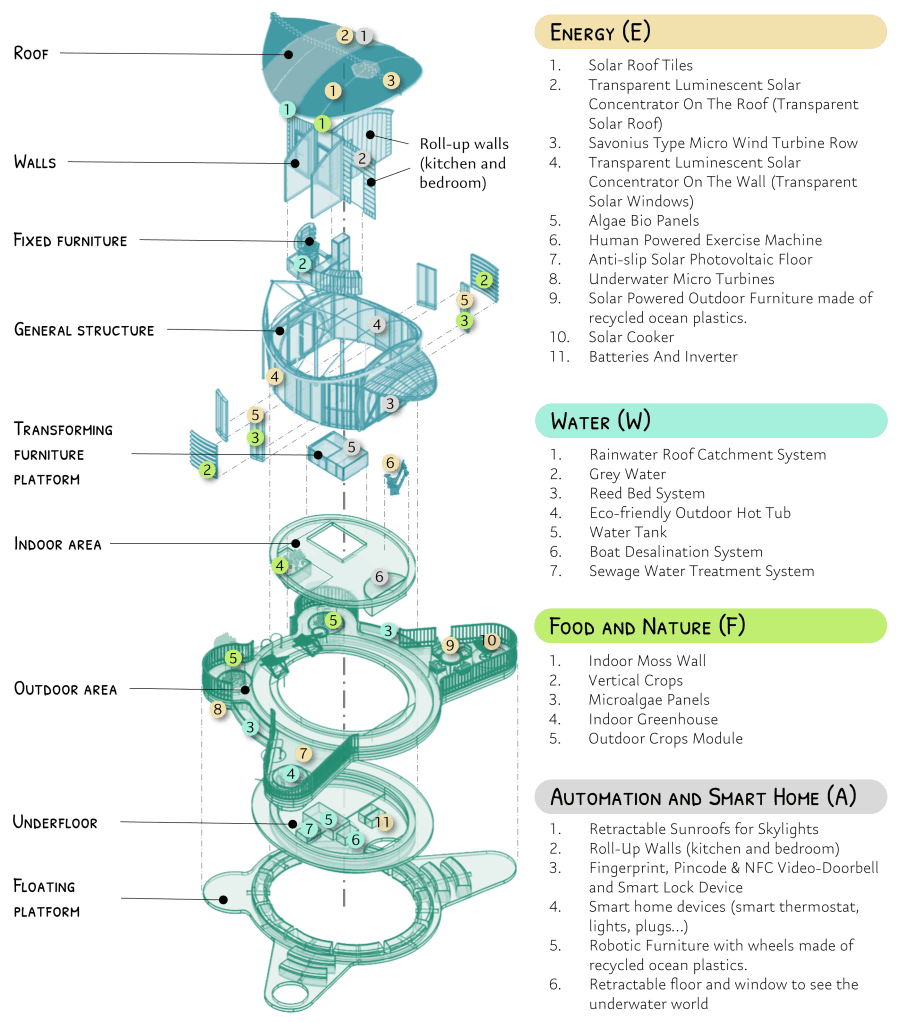
In Honu, each structural element has an added function to help solve each of the environmental problems mentioned and have self-sufficiency in energy, food, and water (+ natural spaces, waste management, and automation).
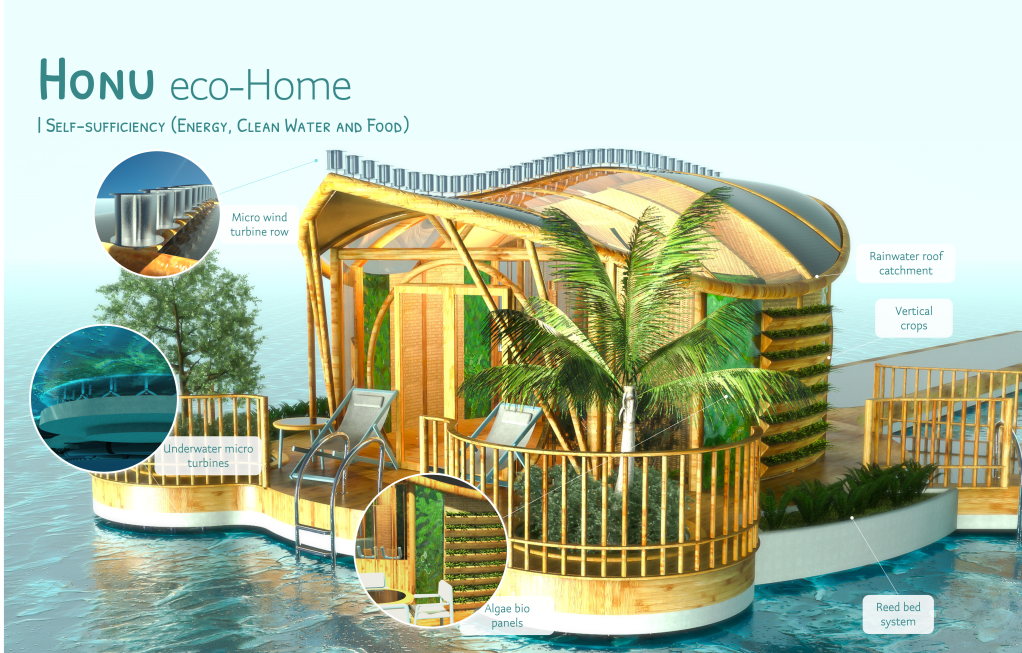
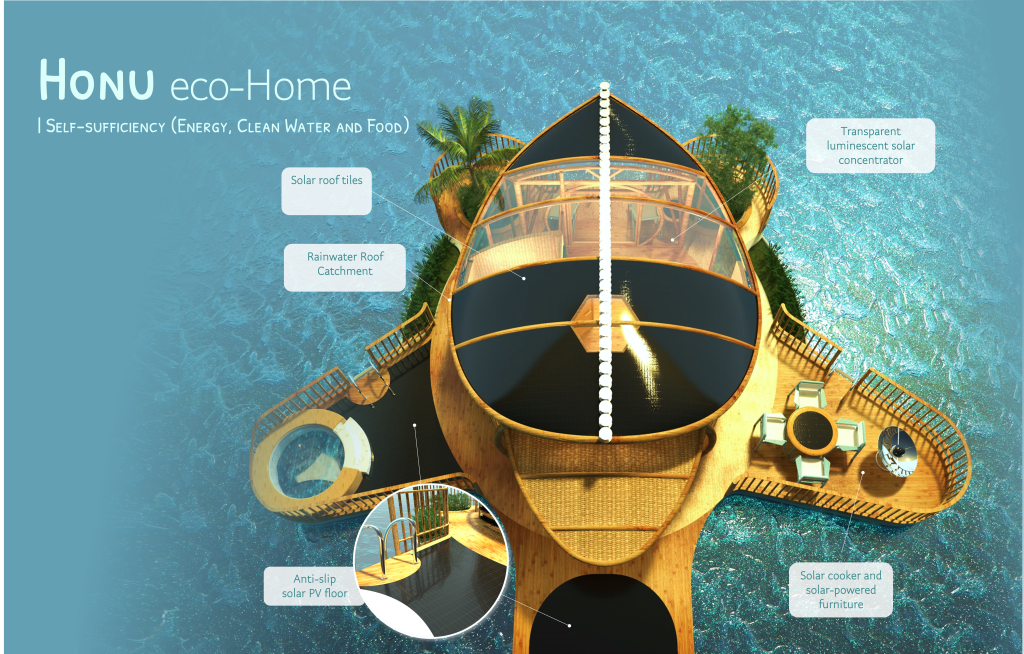
Thanks to the use of sustainable, recycled, and low carbon footprint materials; the integration of renewable energies in roofs, floors, facades, or furniture; green spaces; and an extra floating platform to help solve overpopulation in cities and resist the effects of the rising sea levels…
All the technologies implemented are already feasible today, and Honu innovates in the way of integrating them into the architecture and inventing new products.
Vision and (bio) inspiration
The vision behind Honu is to create a full self-sufficient eco-home where each structural element also has an added function (energy production in walls, windows, floor, ceiling, and furniture; walls with vertical crops; rainwater harvesting on the roof; reed bed systems for greywater treatment; moss walls and mats to purify the air, etc…). Honu provides sustainable solutions to energy production, clean water, waste management and innovates in materials, energy, space optimization, and automation.
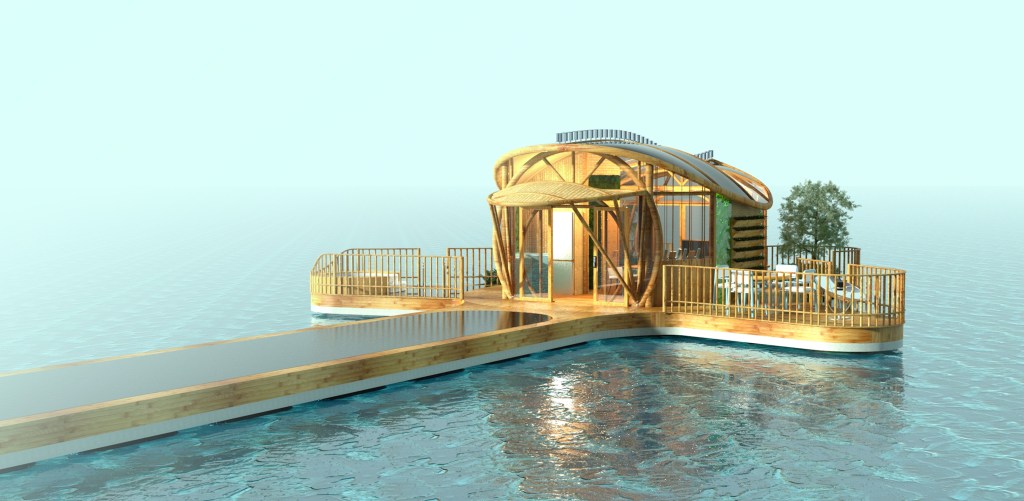
The shape of the house is inspired by a turtle, more striking on the roof and top view (considering the floating platform). Why? The symbolism of the turtle shares similar values to those of Honu’s, such as longevity, self-sufficiency, prosperity, Earth, and transformation. Thousands of turtles die after getting caught in fishing nets, so to help solve this problem, mainly all the furniture and parts of the structure are made from old ones. A turtle is a type of animal that can be on land or in the sea, so the house uses materials and energy sources from above and under the sea. For all these reasons it is called «Honu», which means turtle in Hawaiian.
The shape of the shell, which is the roof, has a shape similar to a hyperbolic paraboloid, which allows it to collect all the rainwater on two edges and to have a very optimal curvature to capture sunlight throughout the year.
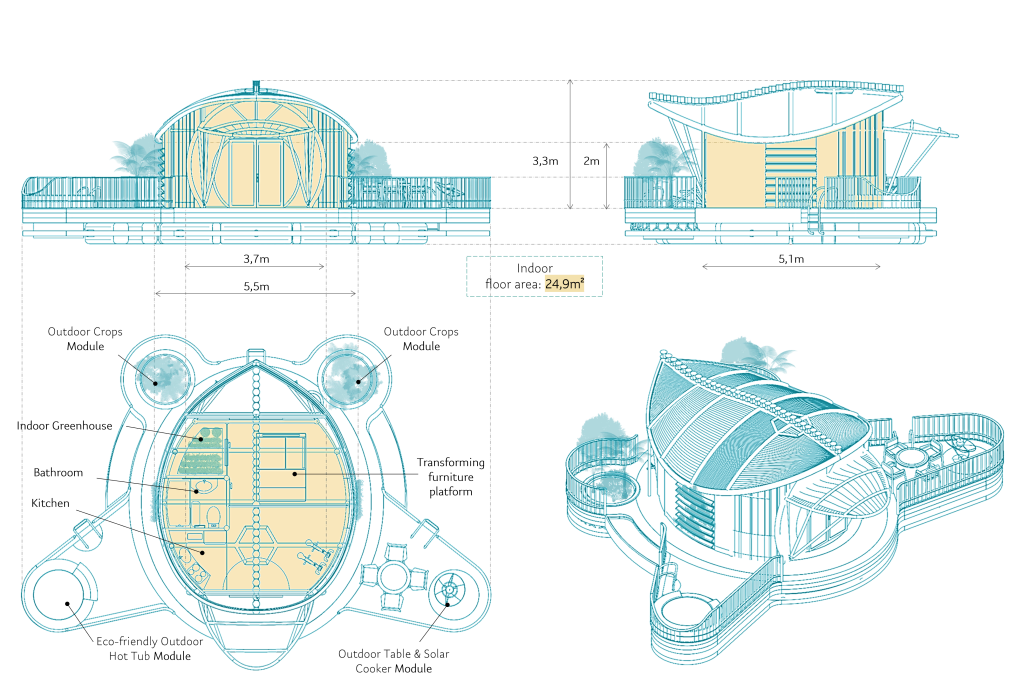
Dimensions
Honu City Archipelago
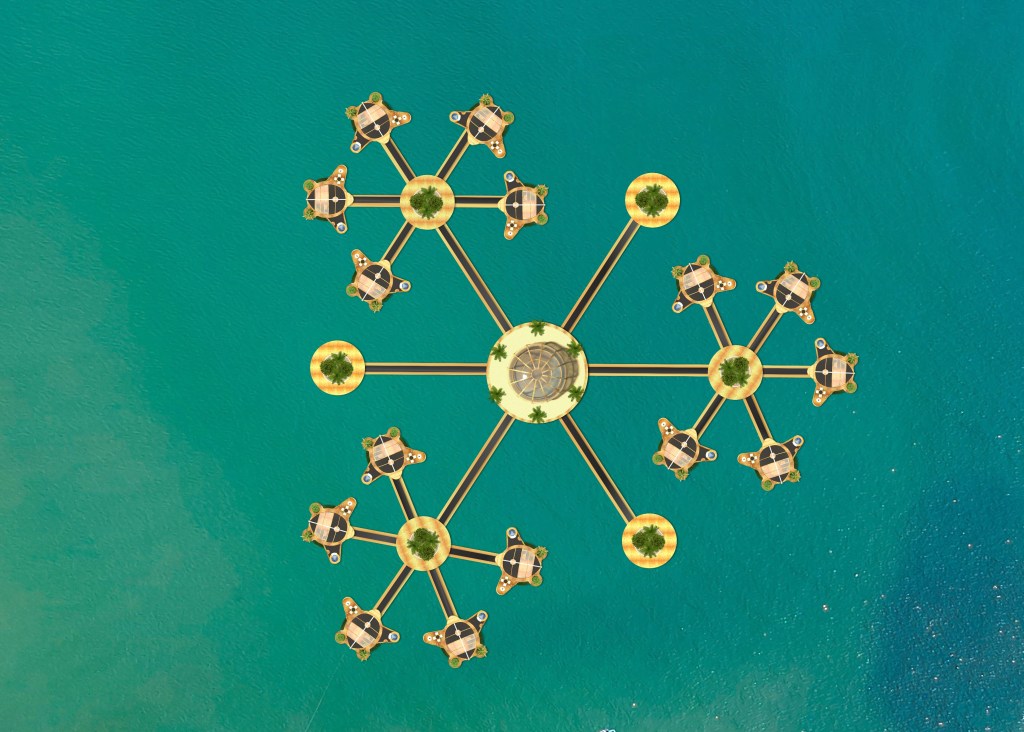
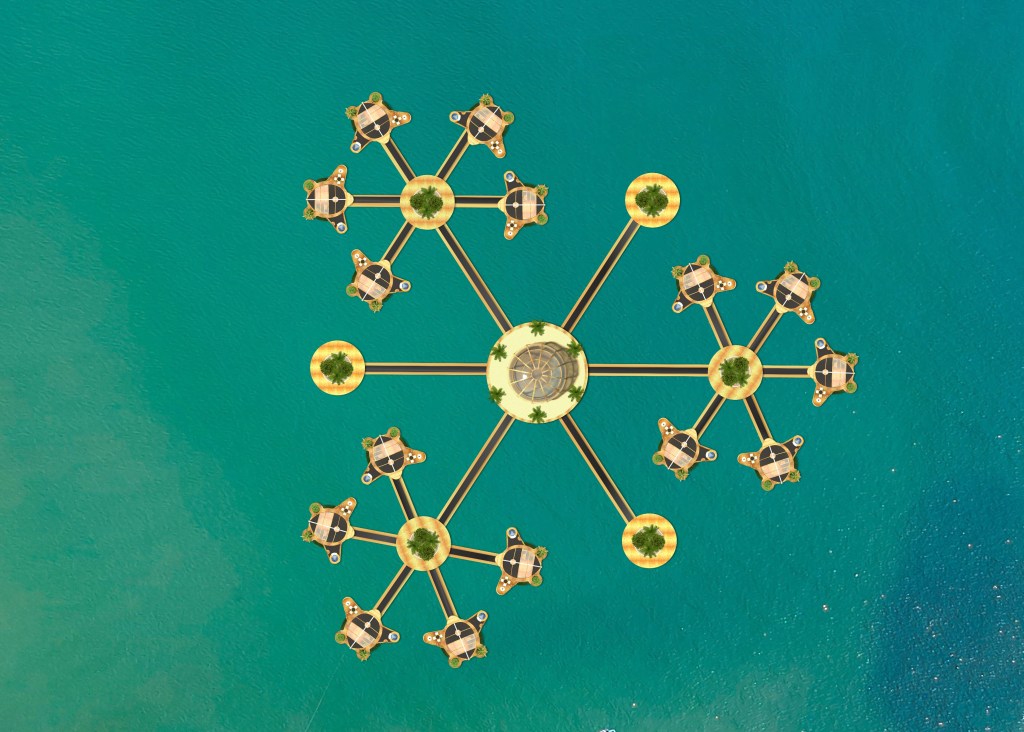
Honu City Archipelago is a city made of Honu eco-homes, where land and sea coalesce to form a sustainable and self-sufficient metropolis. The interconnected floating houses, ingeniously linked by anti-slip solar platforms that together form corridors, not only offer a unique living experience but also serve as a model for mitigating environmental challenges.
The solar platforms that connect these houses serve dual purposes. Their anti-slip solar floors not only provide safe pathways between homes but also generate clean, renewable energy. These platforms are designed to withstand the challenges posed by rising sea levels, making Honu City a resilient and forward-thinking solution to the threats of climate change.
Beyond their sustainable design, Honu City’s floating corridors prioritize green living. Connecting the several homes you can find green areas, shops, hospitals, restaurants… creating a vibrant urban oasis that promotes biodiversity and enhances the quality of life for its inhabitants.
Honu City Archipelago is not just a city; it’s a symbol of a commitment to a more sustainable future. It demonstrates that by harmonizing tradition and innovation, we can create thriving communities that coexist harmoniously with nature.
Welcome to Honu!
 Eduardo Gracia