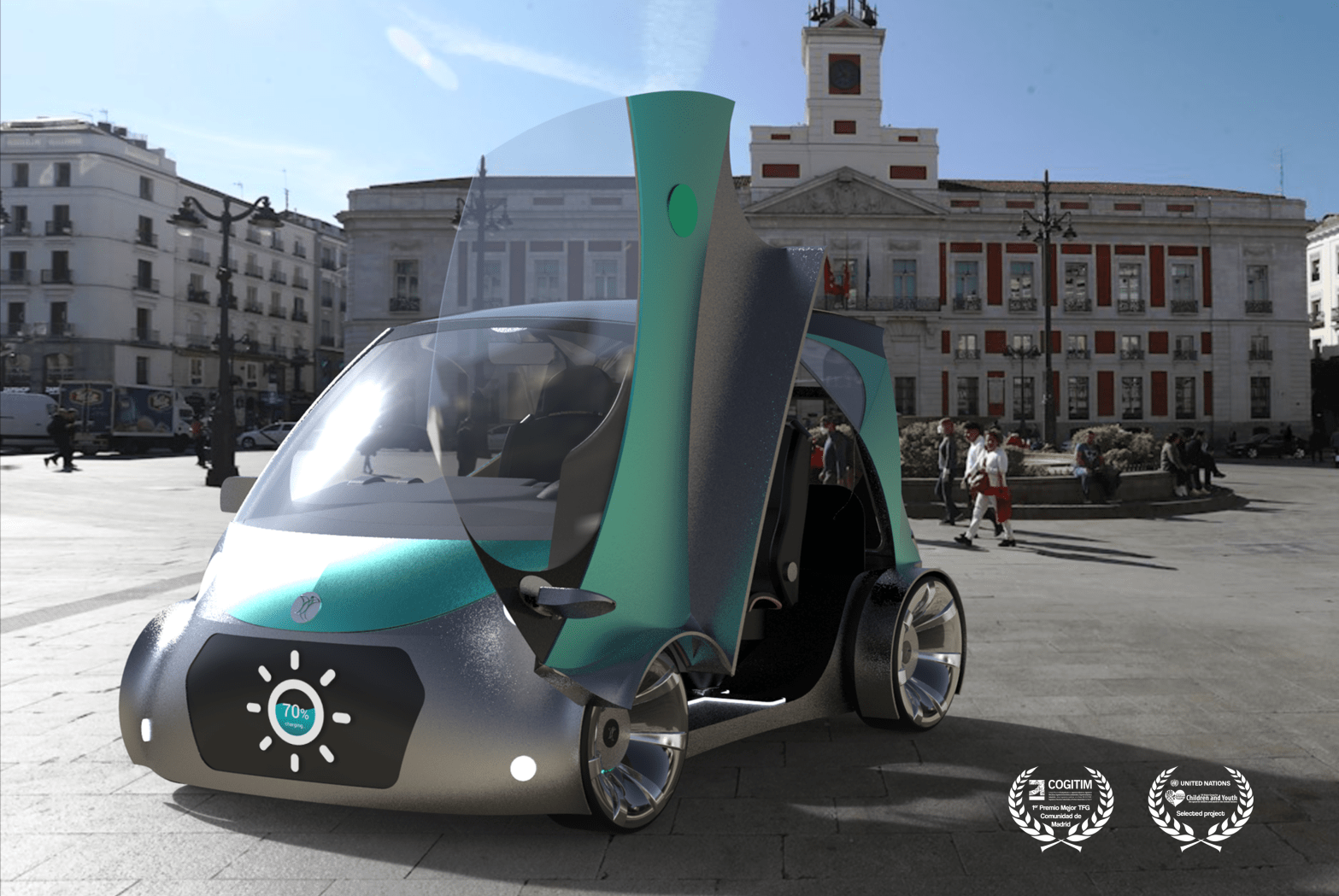
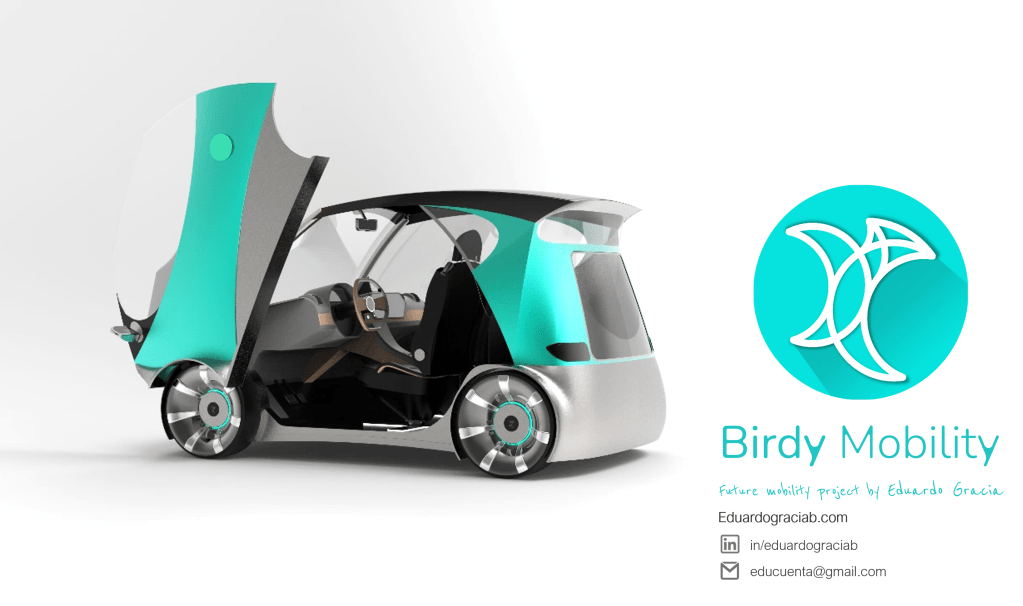
Birdy Mobility solves urban mobility problems (greenhouse gases, share of renewable energy in the electric vehicles consumption, congestion, accidents and stress on the road) with a two-seater model, autonomous, modular, adapted, electric vehicle with integrated photovoltaics to produce electricity while moving, and designing a service to share the vehicles. It has 1.54m2 gallium arsenide solar cells capable of 30.8% efficiency.
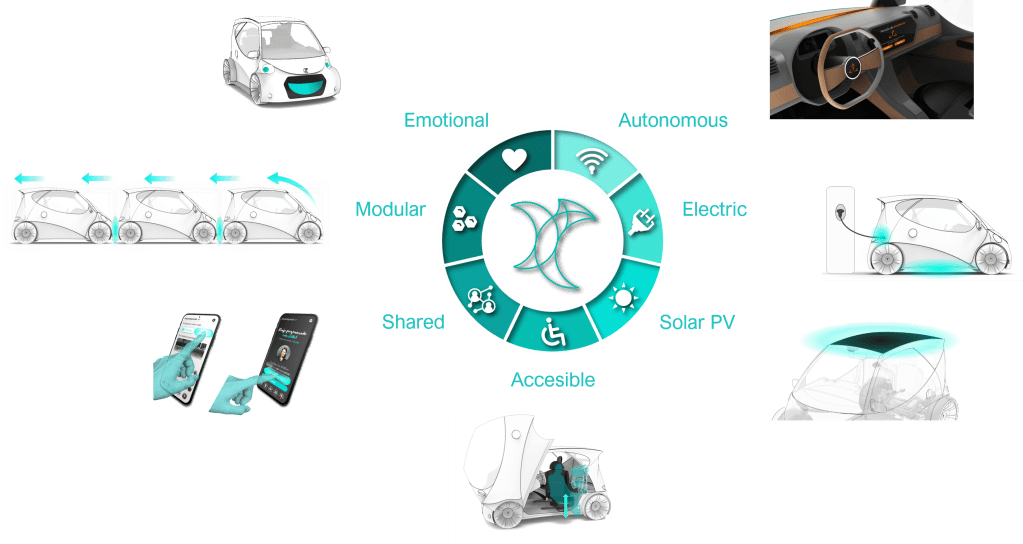
The vehicle can also deliver the electricity it generates to the grid, a V2G (Vehicle-to-grid) bi-directional charging system to feed electricity generated from the vehicle to the grid/house/device. With the project Eduardo Gracia obtained the Top 1 Best Final Degree Project Award of the Community of Madrid (COGITIM). There are three types of interactions designed: user-vehicle, user-community and vehicle-city.
Problem
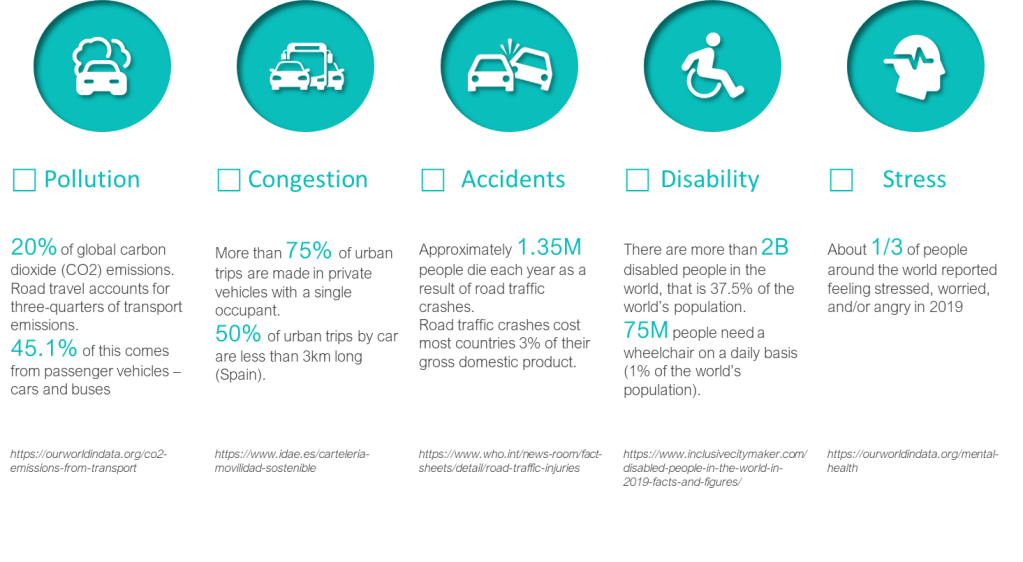
Cities are growing; therefore, widespread traffic, road accidents, and greenhouse gas emissions and other pollution are increasing as well. Mobility and transportation are the leading causes of these issues, but can be also the solution. One solution to these problems is autonomous, shared and electric vehicles. However, these vehicles must be manufactured in a sustainable way throughout their life cycle and the electricity they run on must be obtained from renewable sources. If we look at the percentages in the European Union in the share of renewable energy in the transport consumption, the average is just 6%.
Solution
Birdy Mobility solution is a vehicle that integrates the four key auto-industry megatrends: Autonomous, Connected, Electric, and Shared (ACES) but also integrating solar panels into the vehicle design to generate electricity, which guarantees that the vehicle´s consumption is at least partly covered by renewable energy, and a vehicle-to-grid technology to give this clean energy to the grid or other electronic devices. The vehicle has a system to facilitate the access for people with disability and technologies such as emotion recognition to help the users choose the best experience that they want to live.
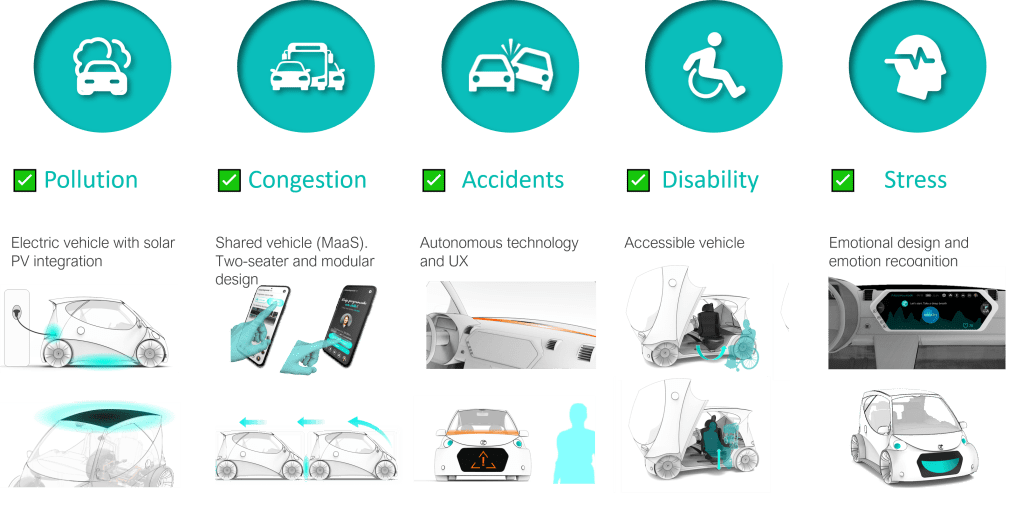
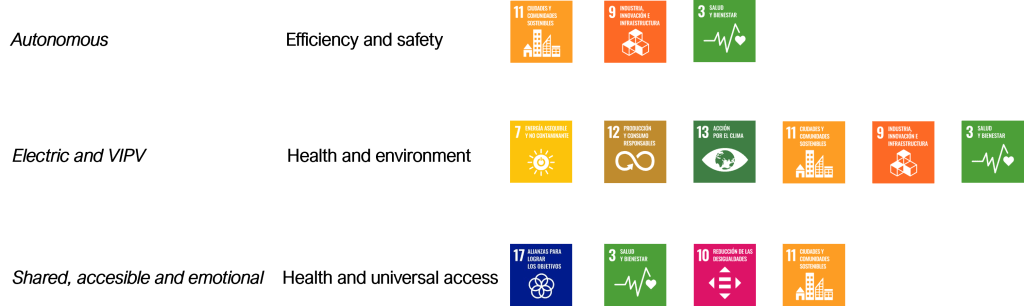
According to the UN chronicle, “transportation is a key development issue and target 11.2 is important to achieve safe, resilient and sustainable cities”. The project is designed to be an autonomous, shared, adapted vehicle, electric and solar. This means that in addition to the SDGs related to safety (3 and 11) and efficiency (7, 9, 12, 17) of the current shared electric vehicles, due to its autonomous and adapted condition it includes universal access factors and due to the fact that it is solar as well as electric, other factors related to sustainable mobility such as the production of clean energy while moving (13). The measurement of vital signs, together with this last feature, also favors SDG 3 of Health and Well-being.
Methodology
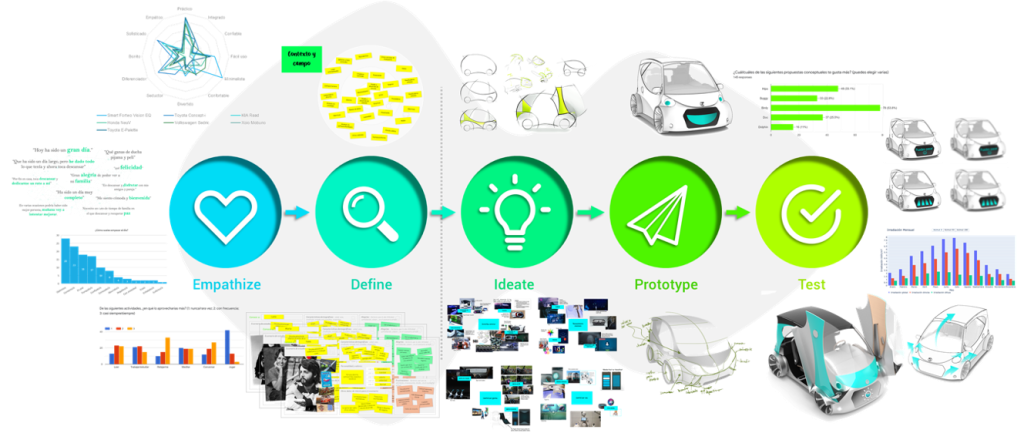
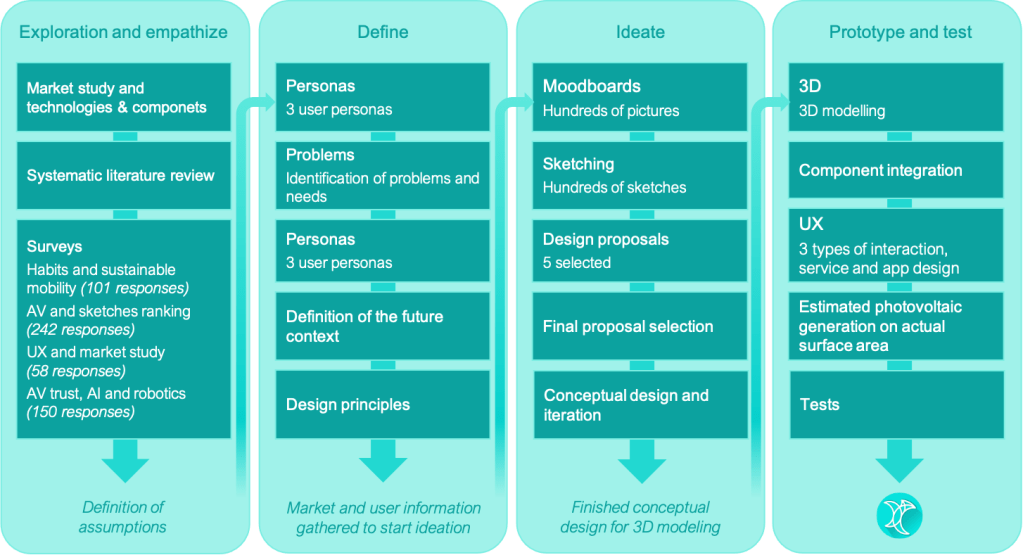
Design methodologies used:
- Design Thinking: main methodology and guidance
- Vision in ProductDesign: methodology analyze past and present (current solutions, relationships and context) and define future (context, relationships and final solution)
- Frame Innovation: secondary methodology identifying problems, paradoxes and taking frames of reference
- SCAMPER: secondary methodology conceptual development to iterate (replace, combine, adapt, modify, put to other uses, remove or rearrange parts of your design)
Design
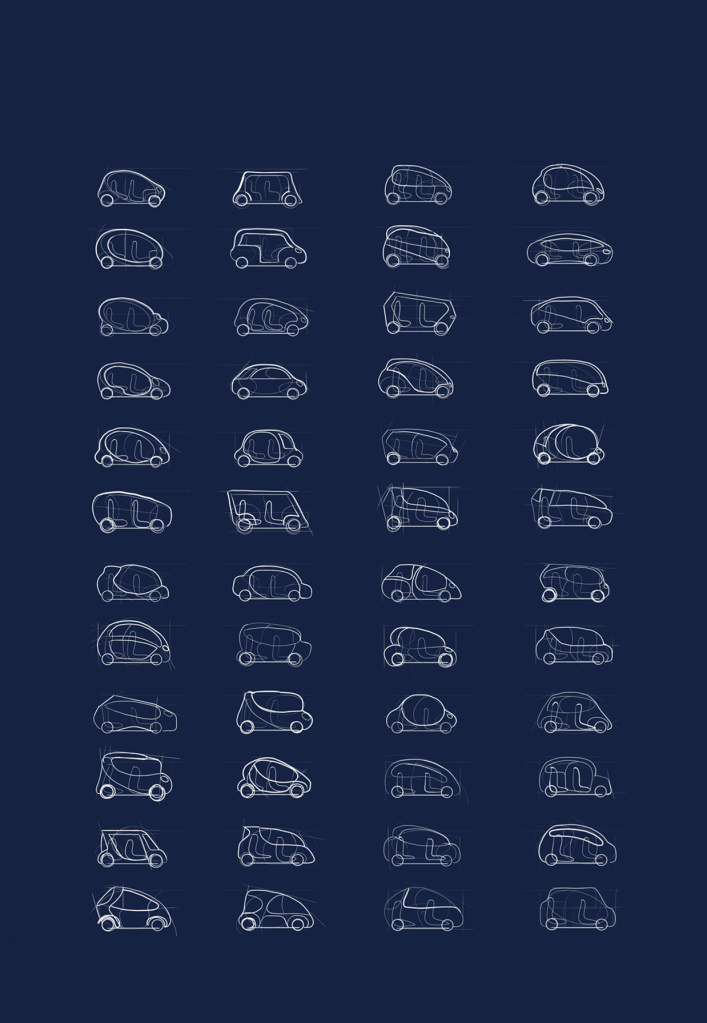
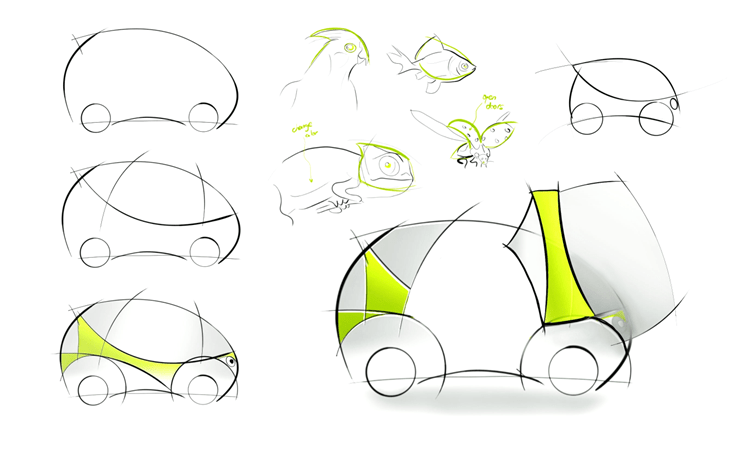
First sketches:
Autonomous
Components: The distribution for the autonomous vehicle components has been defined by taking reference from the Tesla Model X and other market exponents and applying it to the final design. It has integrated a system of 4 upper cameras, a triple front camera and 4 cameras between the two doors; 12 ultrasonic sensors; and short and medium range radars distributed around the body and a long range one in the front.
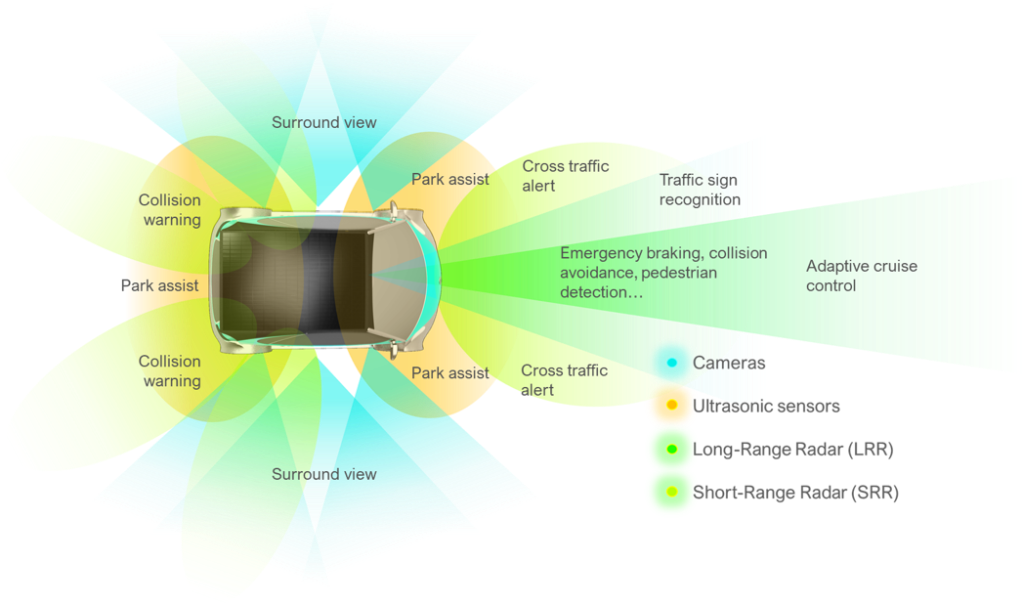
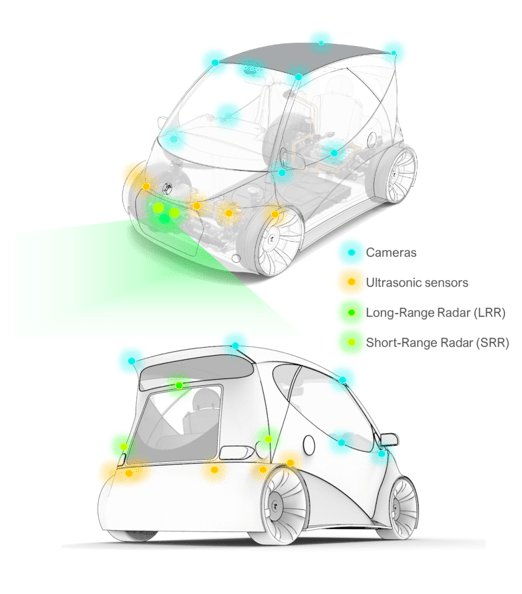
The autonomous vehicle Birdy has two modes, in case the user wants to drive (with advanced driver assistance systems) or let the vehicle drive with full Driving Automation:
- SAE Level 3: Conditional Driving Automation mode, where the vehicle primarily focused on collision avoidance technologies and driver aids, such as night vision, driver alertness and adaptive cruise control.
- SAE Level 5: Full Driving Automation
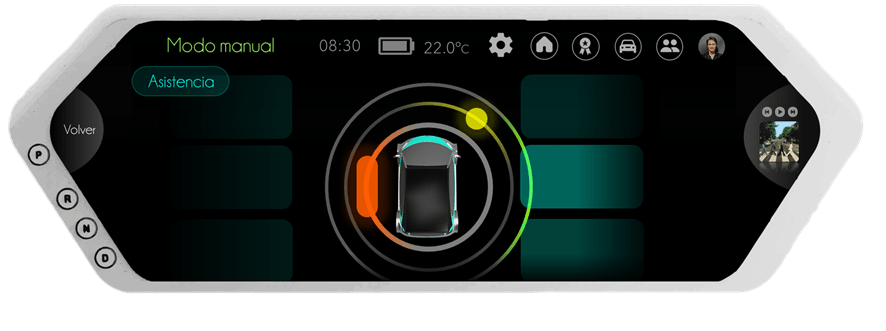
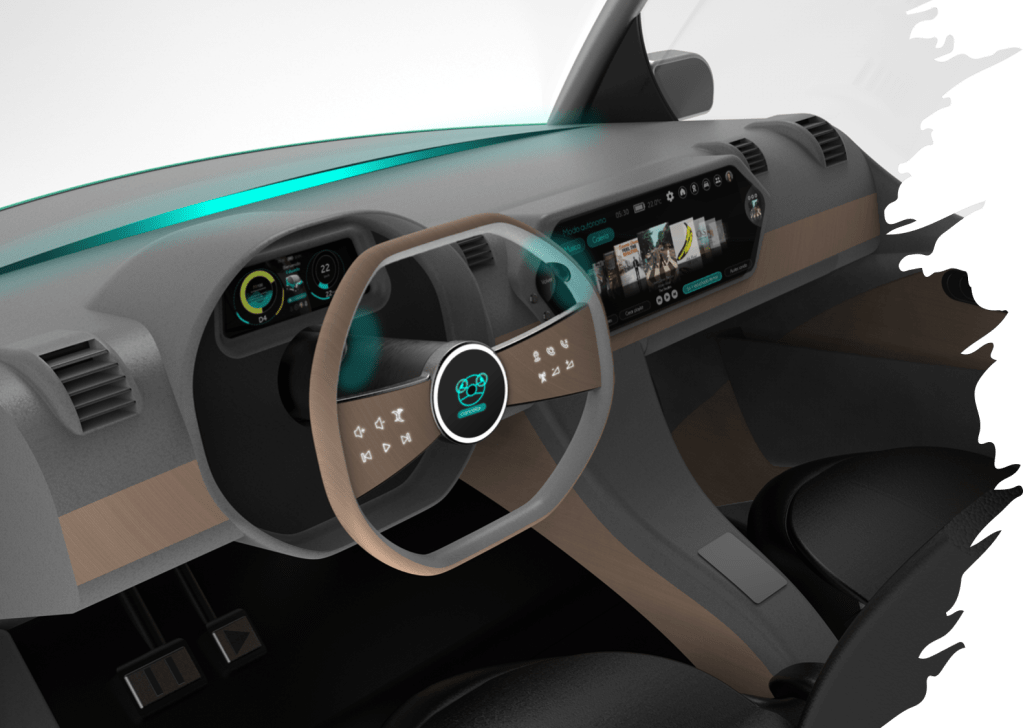
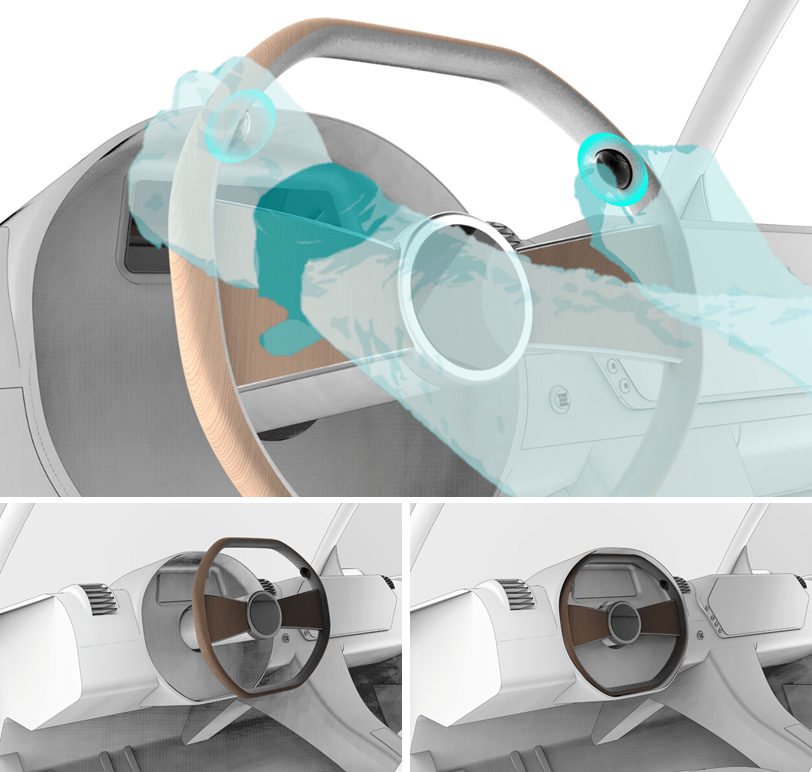
Motion sickness is a frequent occurrence in vehicle travel and when driving in autonomous mode passengers do not have control of when the vehicle is going to brake, accelerate, turn right, left… which can increase it and even produce anxiety in the face of unpredictable behavior.
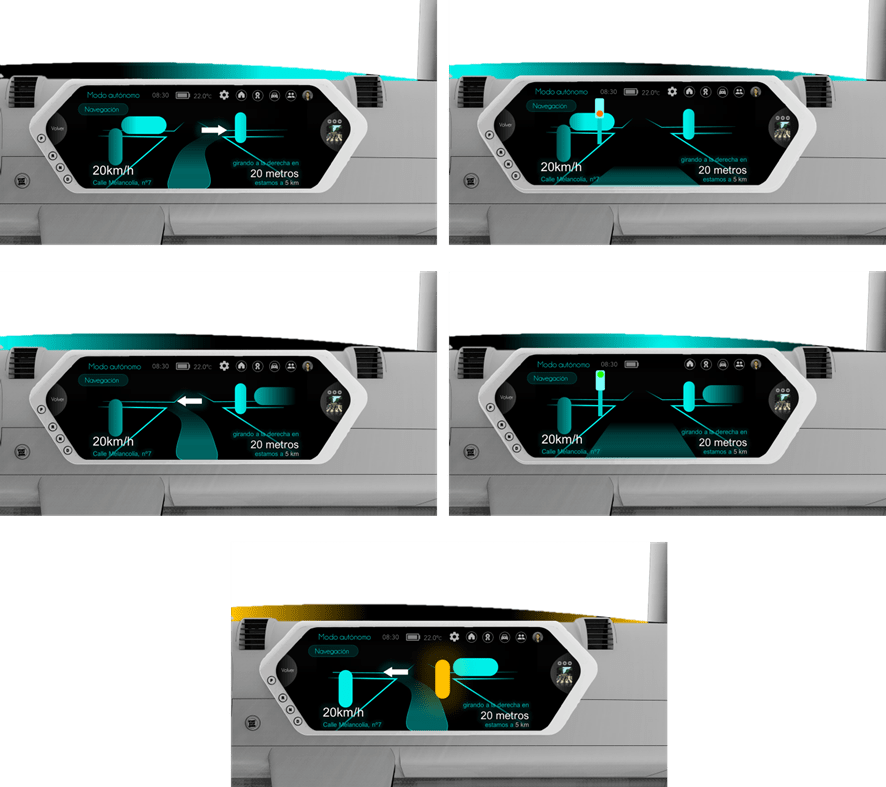
In this project, a UX has been designed to reduce motion sickness through the front lighting display and seat vibration. Consciously (in the case of the user being aware) or unconsciously, it will indicate to the user if he is going to turn right (illumination to the right), left, accelerate (circle moves outwards), brake (circle moves inwards) or avoiding a possible accident (orange circle outside) as can be seen in the following images. In addition, if the navigation mode is open on the main screen, the complete scenario is displayed.
Electric and solar
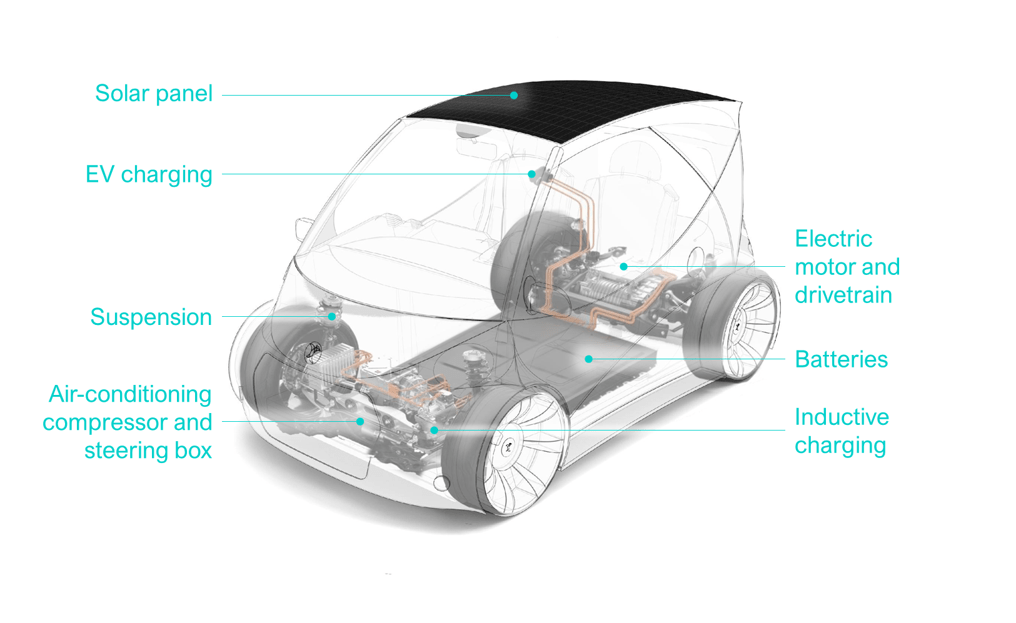
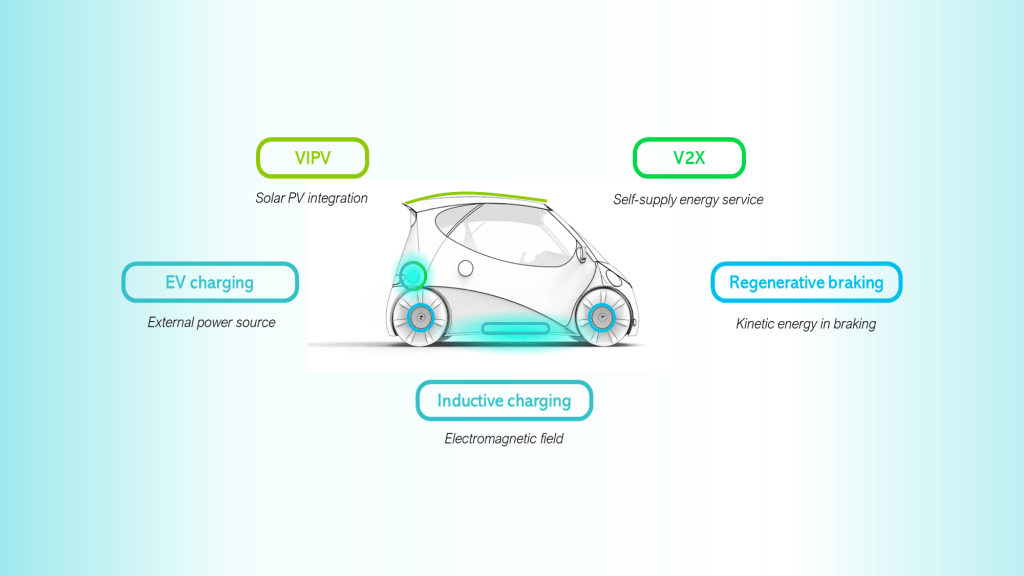
Batteries: the electric motor uses the electric current stored in rechargeable batteries. The battery is lithium-ion. A 45 kWh battery pack with a range of 330 km has been integrated for this 2-seater vehicle. The battery is located under the floor, lowering the center of gravity and giving the car greater stability. The cell pack is protected by a platform built in steel and some aluminum components and is located between the axles.
Regenerative braking: When decelerating, it can recover the braking energy by transforming the kinetic energy into electrical energy that is stored in the battery.
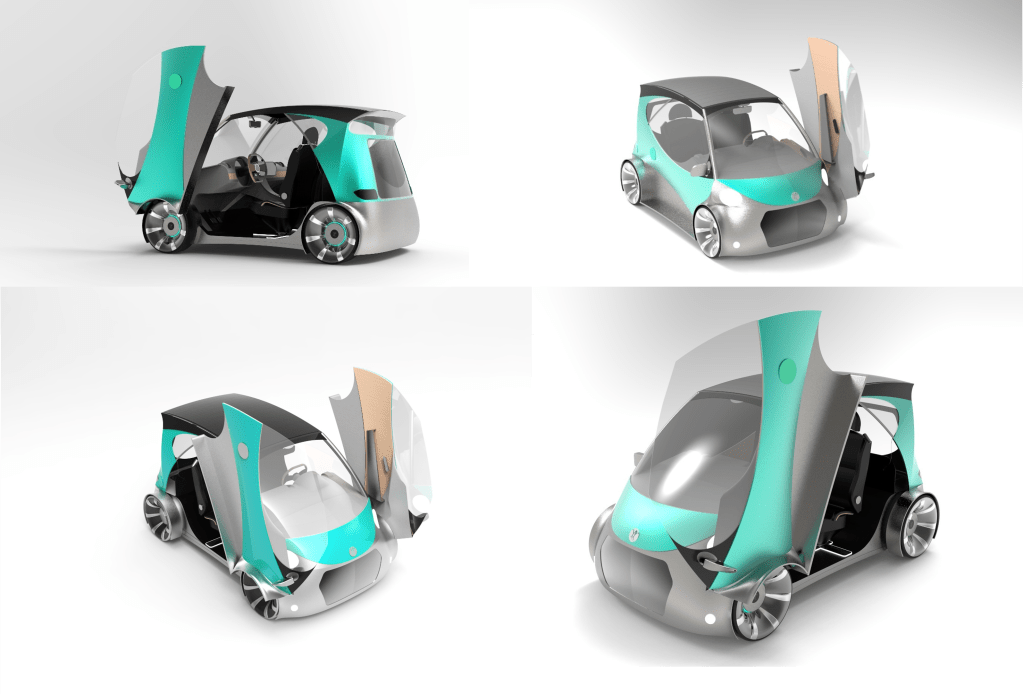
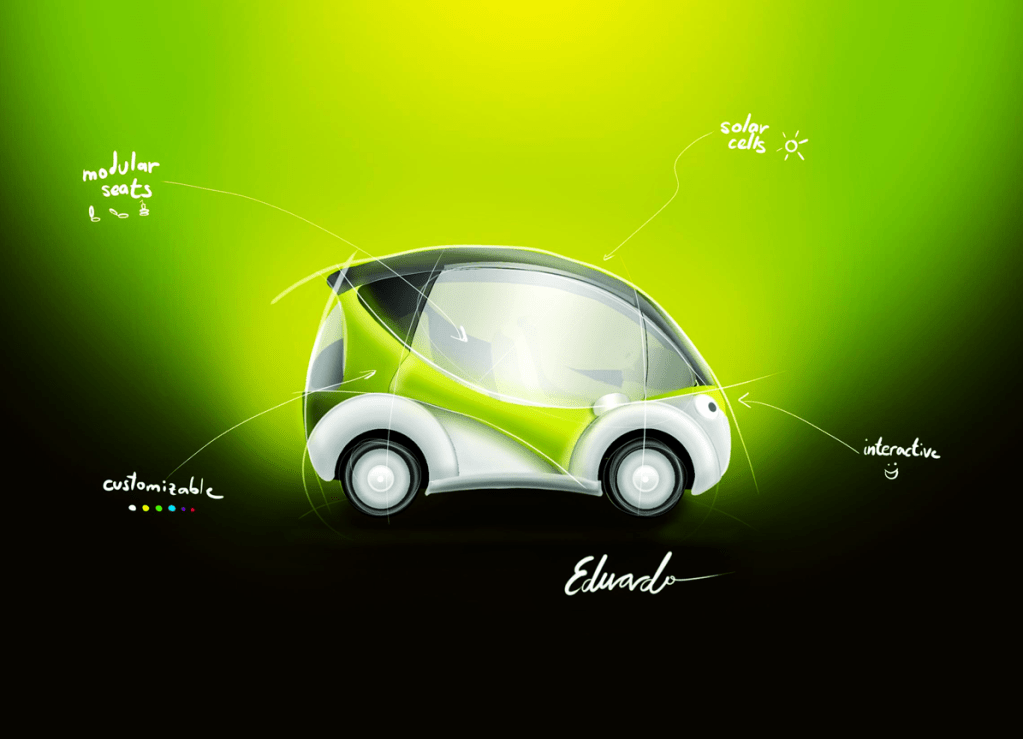
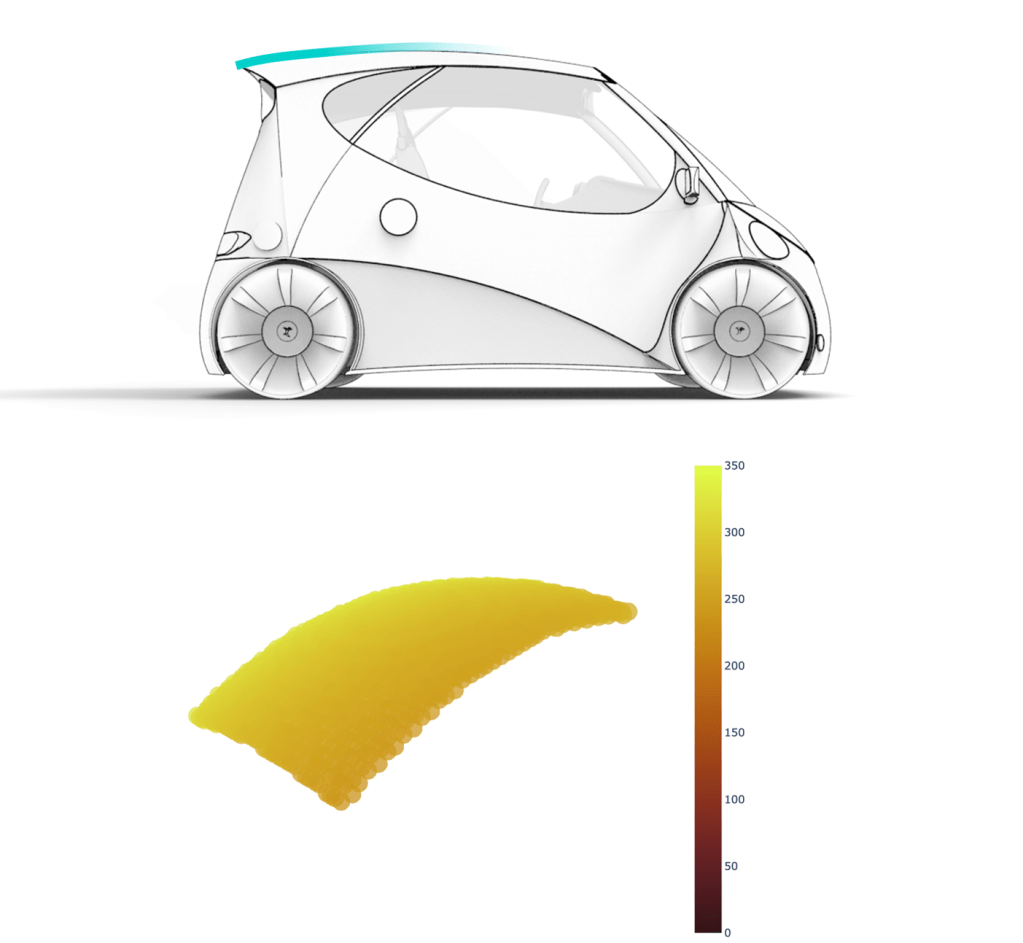
VIPV: designates the mechanical, electrical and design-technical integration of photovoltaic modules into vehicles. A larger upper area for solar generation thanks to the integration of solar panels on the roof has been one of the most influential criteria in the design. For that reason the two-seater vehicle has the rear end detail that enlarges the area as indicated in the following image.
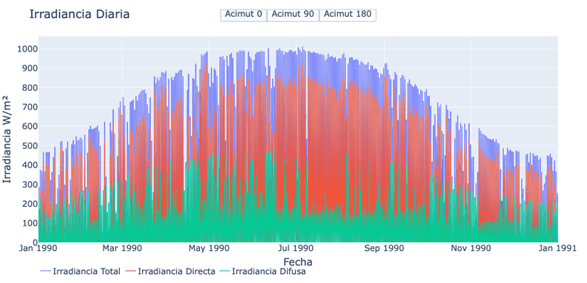
V2G/V2L is a technology that enables energy to be pushed back to the power grid or another electric device from the battery of an electric car. Because the vehicle has solar panel that means it’s like a mobile solar power plant that can share its clean energy to the outside.
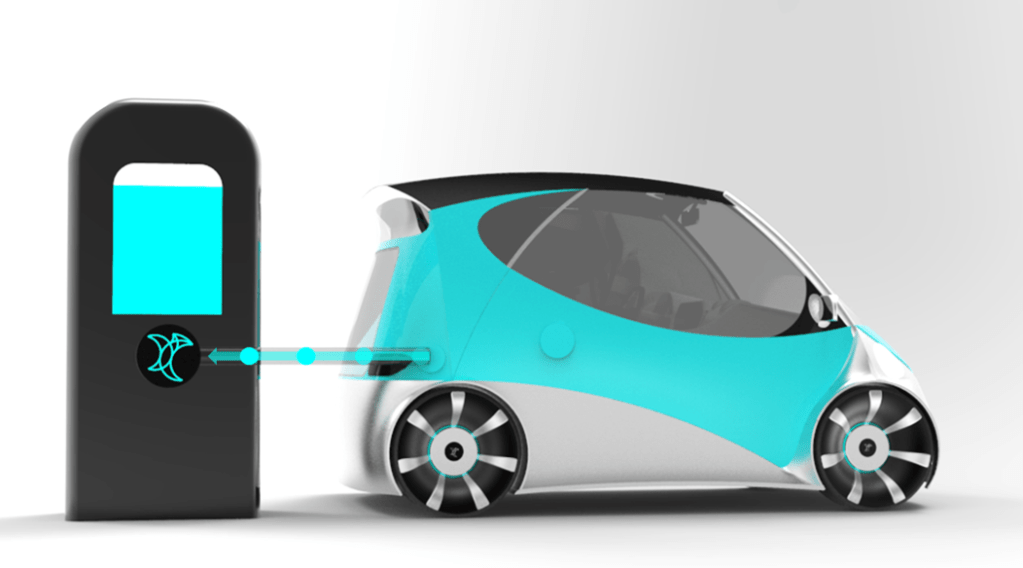
Inductive charging: wireless electric-car charging using electromagnetic induction.
Shared
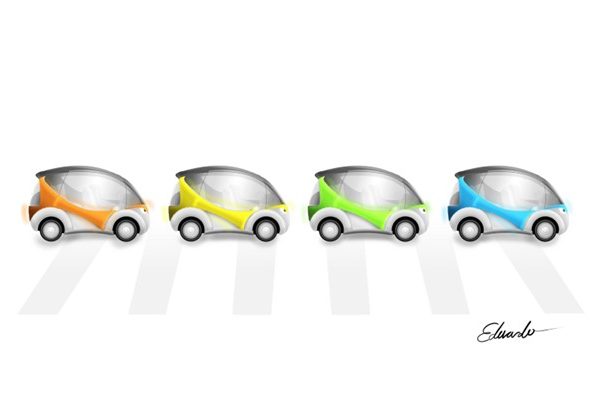
The network of vehicles is distributed along the territory close to the user with a color code: •Green are the free ones; •Orange on the way, with both seats occupied or with only one who wants an individual experience; •Blue with a free seat and availability to share according to preferences.
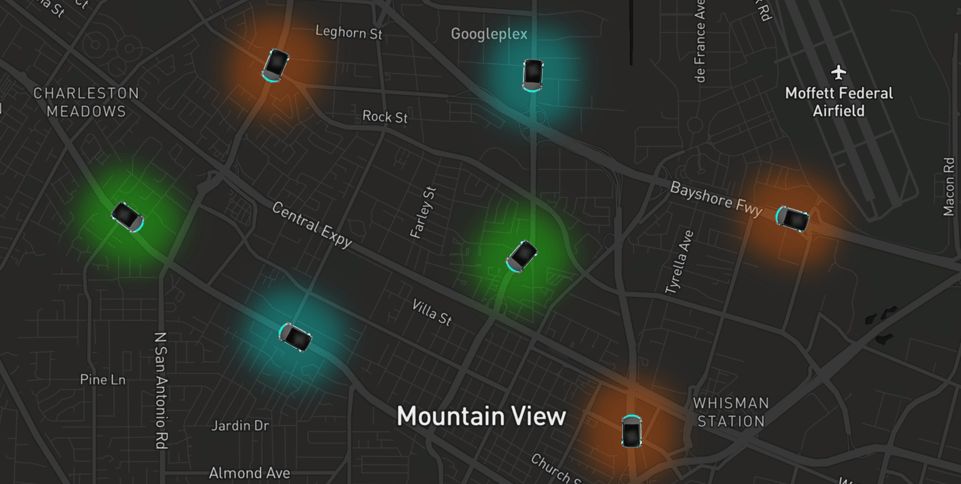
The vehicle request, as well as preferences, search for travel companions… will be done through an application for mobile devices designed to be available in different stores such as App Store or Google Play. The need for the application is justified to allow communication between the vehicle-user and user-other users.
Interaction
Vehicle-user interaction
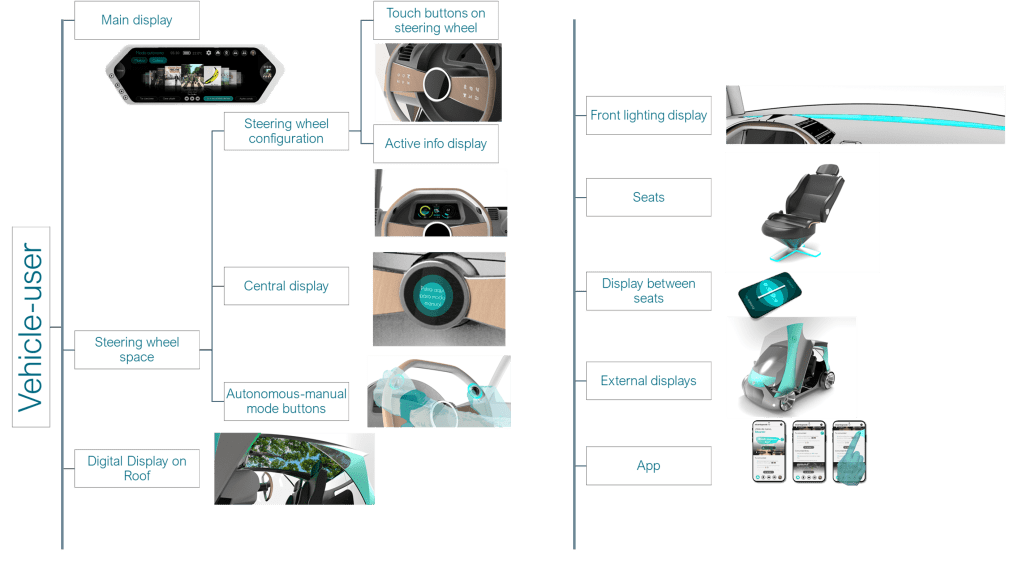
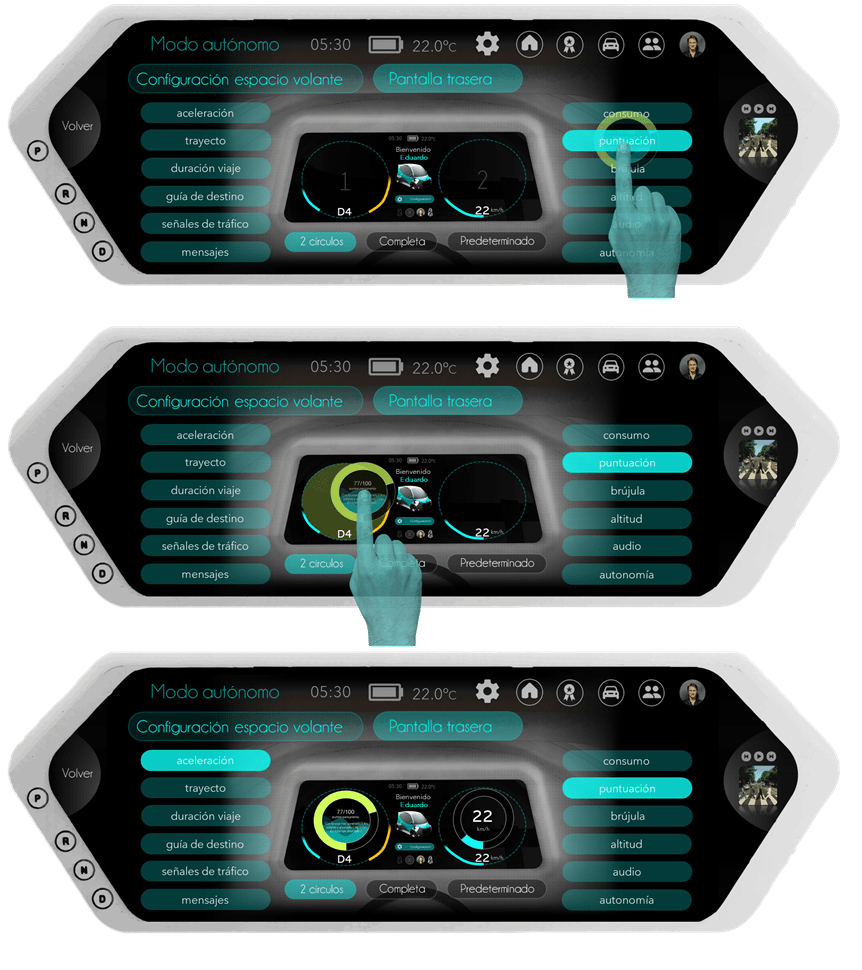
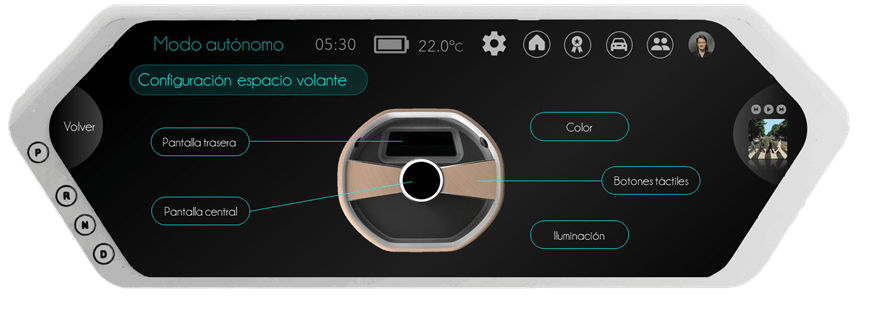
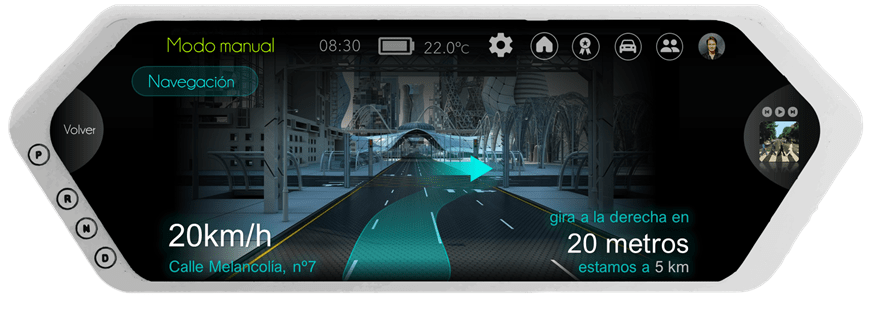
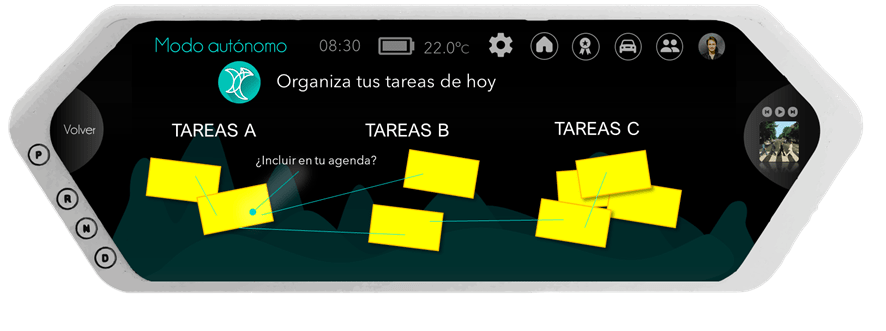
The user-vehicle interaction is the core of trust building inside the vehicle. This encompasses from the request for a vehicle until the user leaves the vehicle. It is achieved through the exterior and interior interfaces and the application. The following figure shows the different screens and resources used to create the user experience.
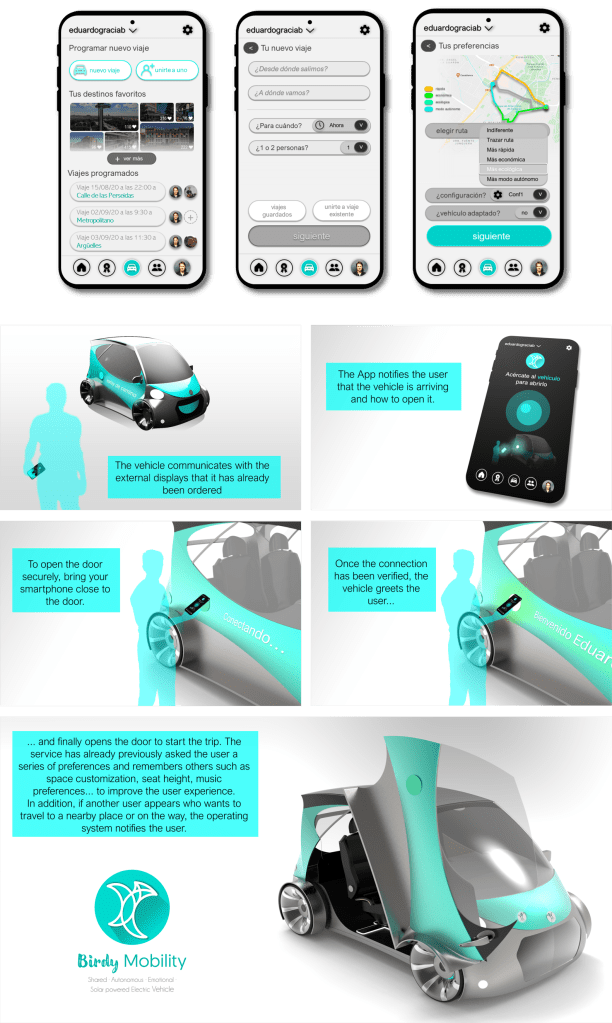
To request a vehicle, open the application and select the third icon at the bottom, which shows a car, or when you open the application, a window appears asking if you want to travel somewhere.
To schedule a new trip, two options are shown: «new trip» (to create it according to your preferences) or «join one» (to join an existing trip). In addition, the window shows the destinations saved in favorites with the number of «likes» from the community and the trips that have been scheduled with synthesized information and whether the user is traveling alone or with a companion through the profile images.
The last screen, «your preferences“, allows the user to choose the route based on criteria such as speed, price or emissions. It also allows you to choose a saved configuration where the virtual assistant remembers your tastes, preferences… that you have made along other trips and the possibility of selecting «adapted vehicle» so that the vehicle performs the adaptation for people with disabilities.
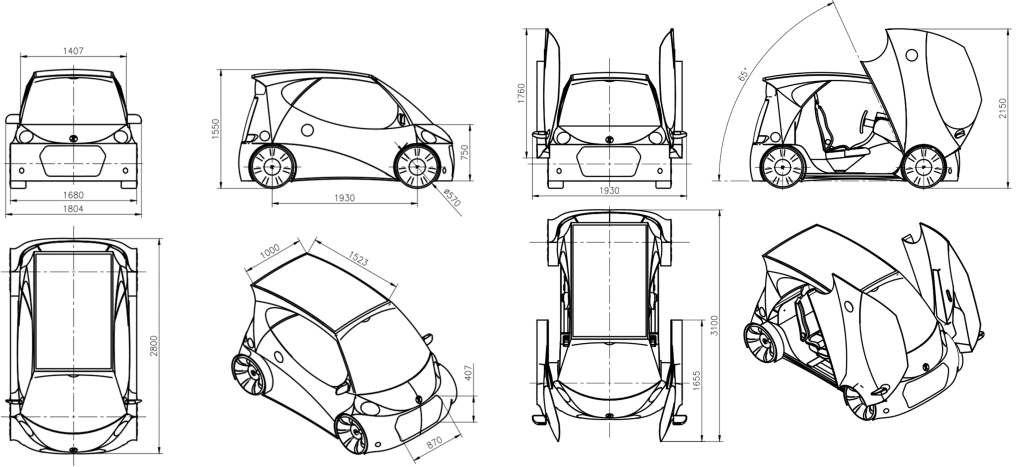
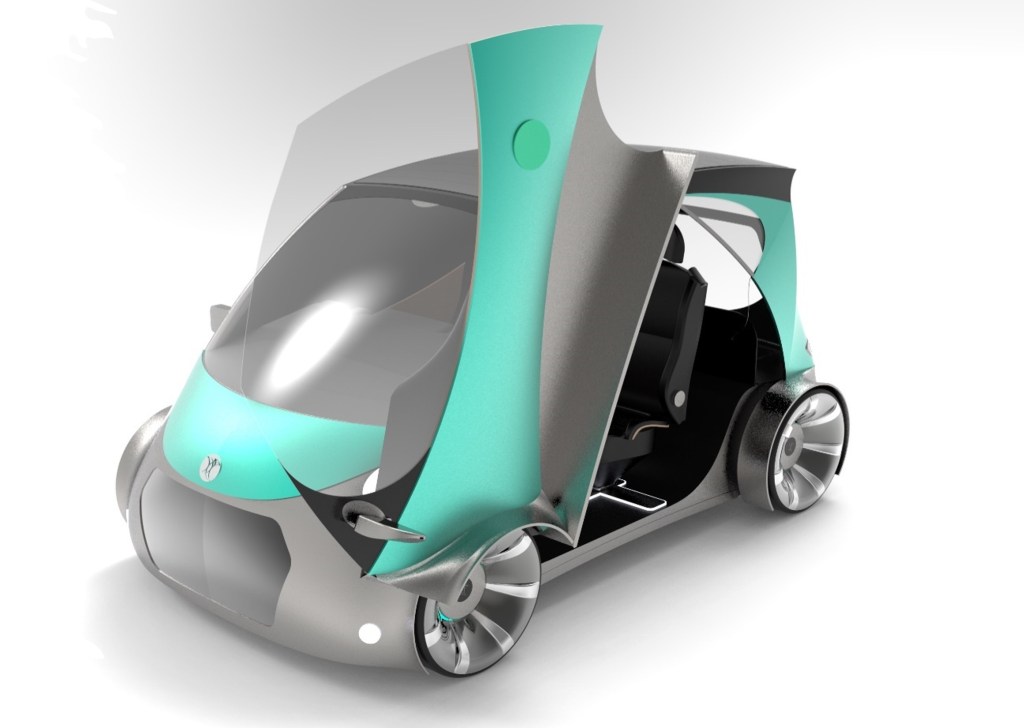
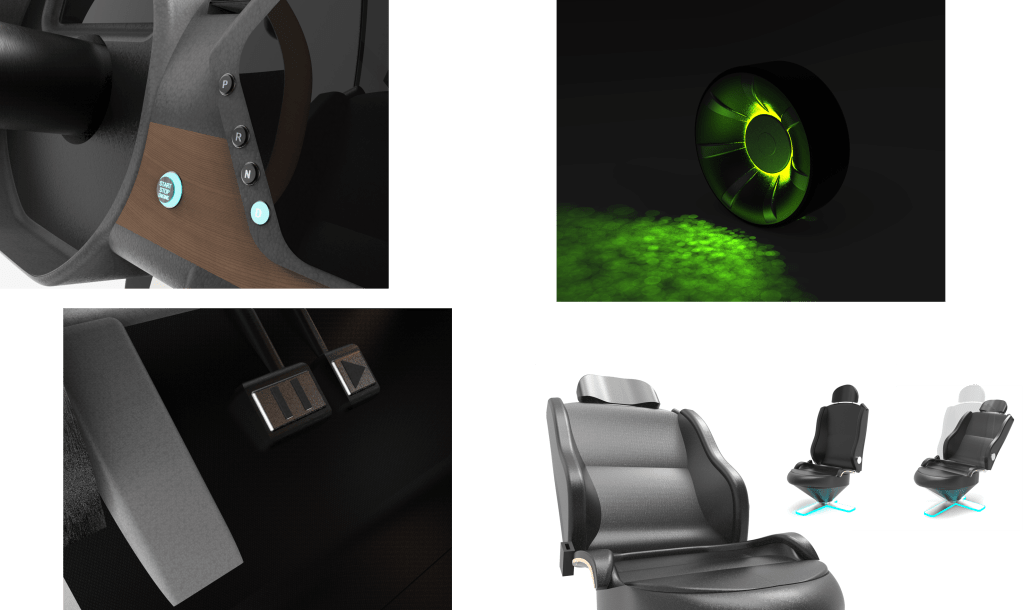
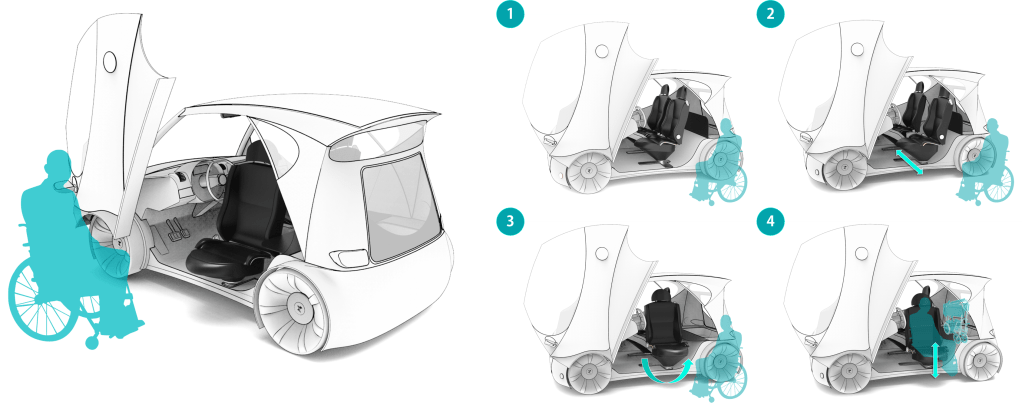
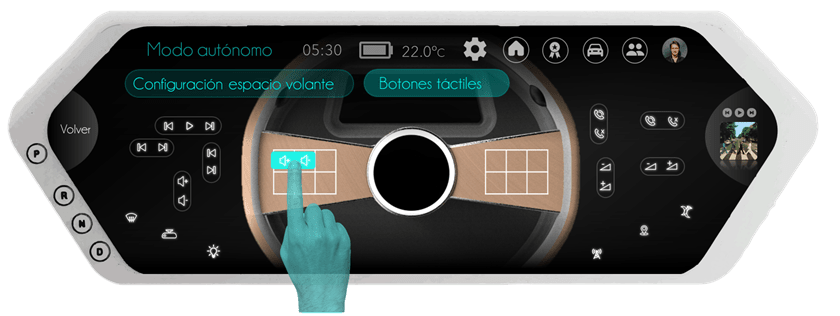
Thanks to the guides located in the seats, a system of displacement and rotation of these, the rear open space to place the wheelchair in a comfortable way, the possibility of incorporating controls for driving in manual mode and the operation of automatic opening and closing of doors, the vehicle has a high accessibility for people with disabilities.
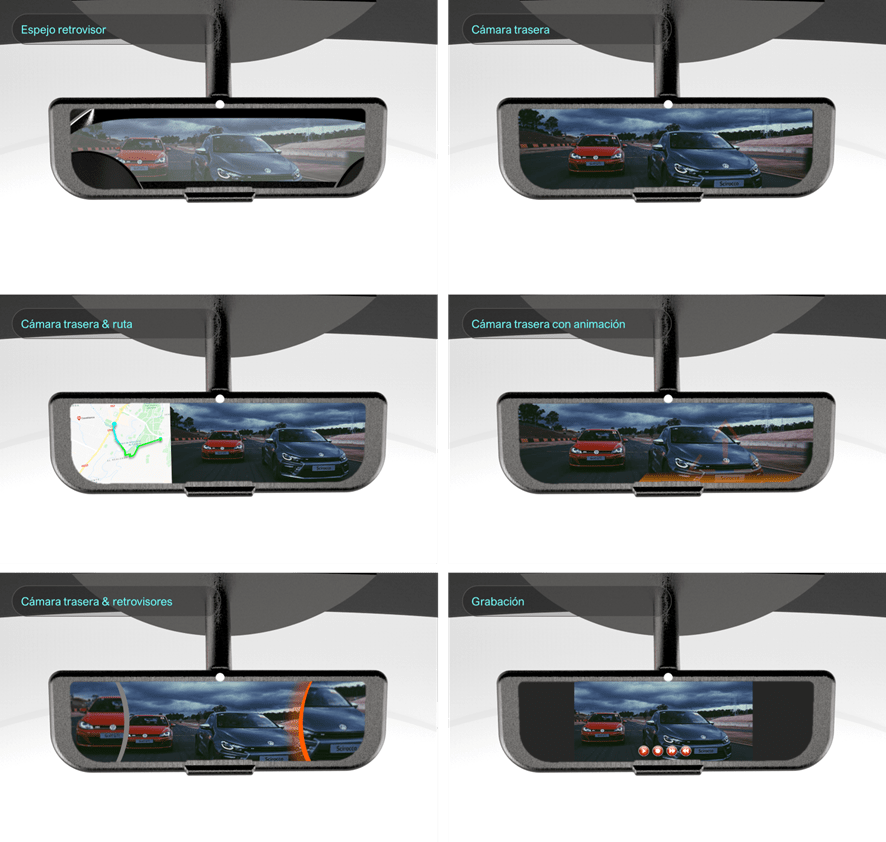
Customization examples:
User-community interaction
The user-user interaction is done through the application. This encompasses the publication or joining of shared trips; the set of data shared by the «Birdy Community» about tastes, trips… and the scoring/award system; and an experience store where users can become developers of applications for the vehicle.
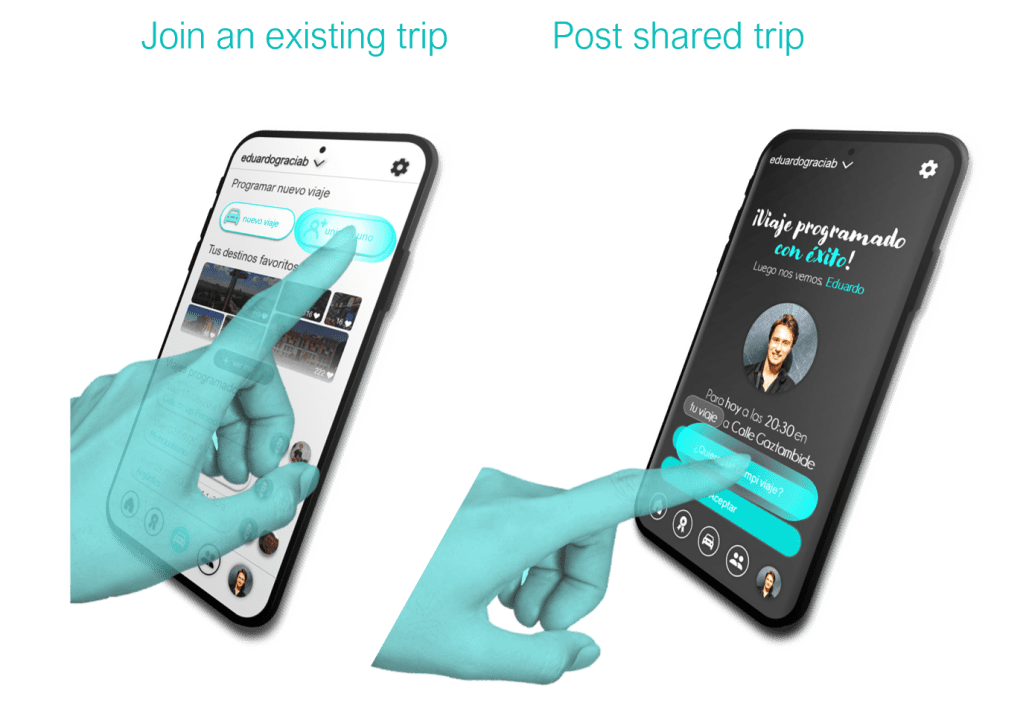
The first screen that appears when opening the application is the home screen and as already mentioned it has a part where it facilitates the publication/joining of a new trip. Scrolling down you can see data from the user’s friends, «your community». It is published for example the places that the people that the user follows have marked as favorite, the ones that are currently moving, the trips that they have published… where you can see the profiles that correspond to each of the points.
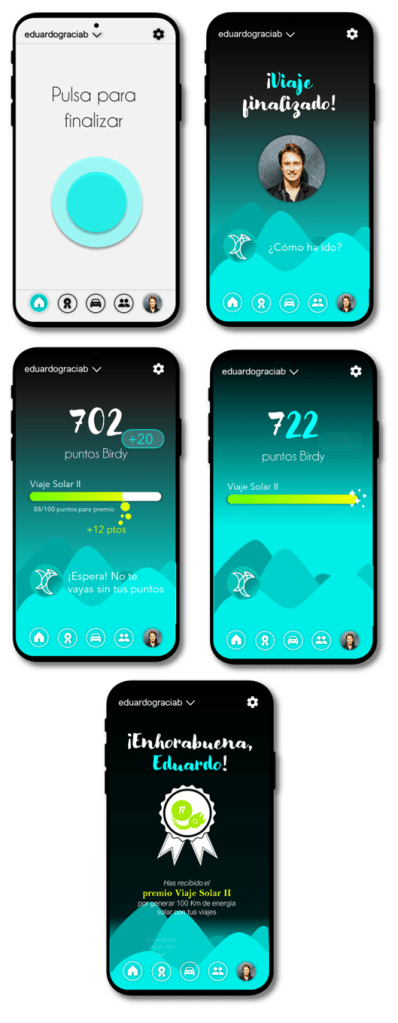
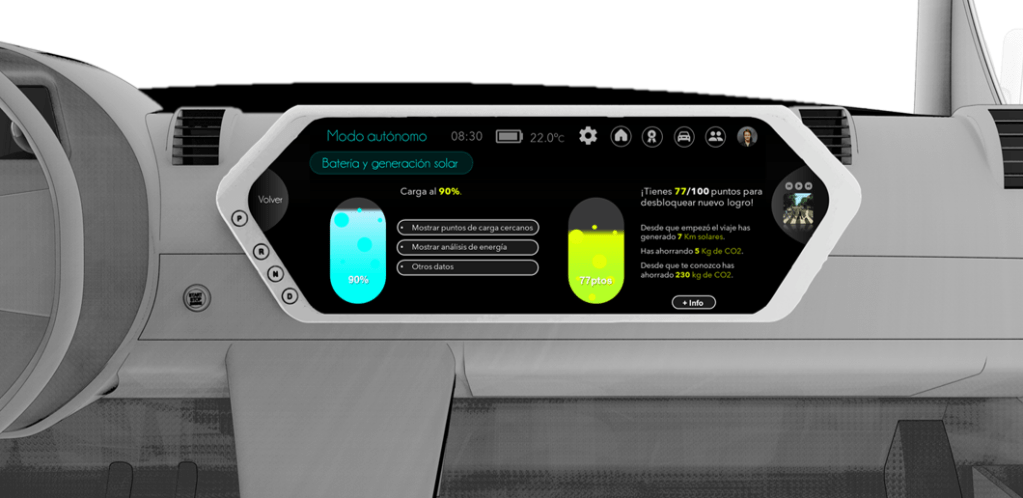
Thanks to the integration of solar panels in the vehicle, Birdy can inform, educate and motivate the user on sustainability issues. It can become an opportunity to awaken or increase ecological awareness in a fun and competitive/cooperative way by presenting it as a game where you can see your statistics, friends, achievements… To do this, a «solar score» system has been designed with the kilometers generated thanks to the solar panels, called «solar kilometers». In the option selected in the following image with the final interface you can see on the one hand the battery with the most appropriate functions for the user (nearby charging points, energy analysis and other data) and on the other hand the part of solar generation and electric vehicle (reporting score for new achievements, kilometers thanks to solar panels, kg of CO2 saved…).
As in choosing that option on the main screen of the vehicle, the application also shows in an interactive way the scoring system and data about solar generation and CO2 savings, with the approximation that each kilometer traveled by an electric car avoids that 134 grams of CO2 are emitted into the atmosphere. When the trip is completed, the points accumulated during the trip are added up and the achievements are displayed.
Once friends have organized their day, they can publish an event for the rest to congratulate or support them, for example «job interview in company X» or «presentation of book Y». Friends can be searched by user name or appear automatically when sharing a trip.
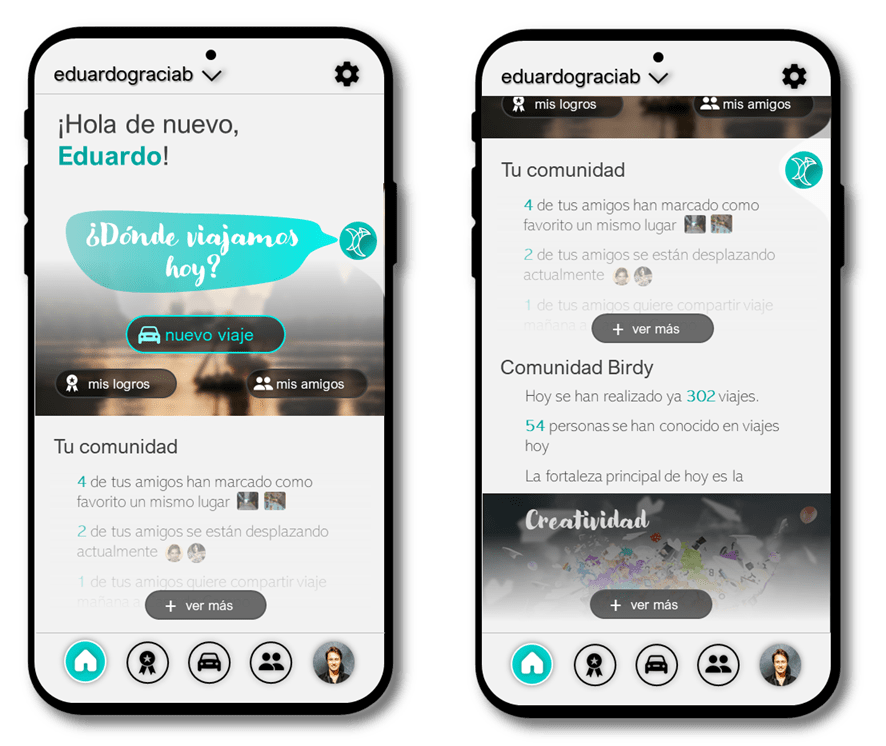
Further down in the «Birdy community» section, the global data of the entire application is displayed, but without showing the profiles of individuals.
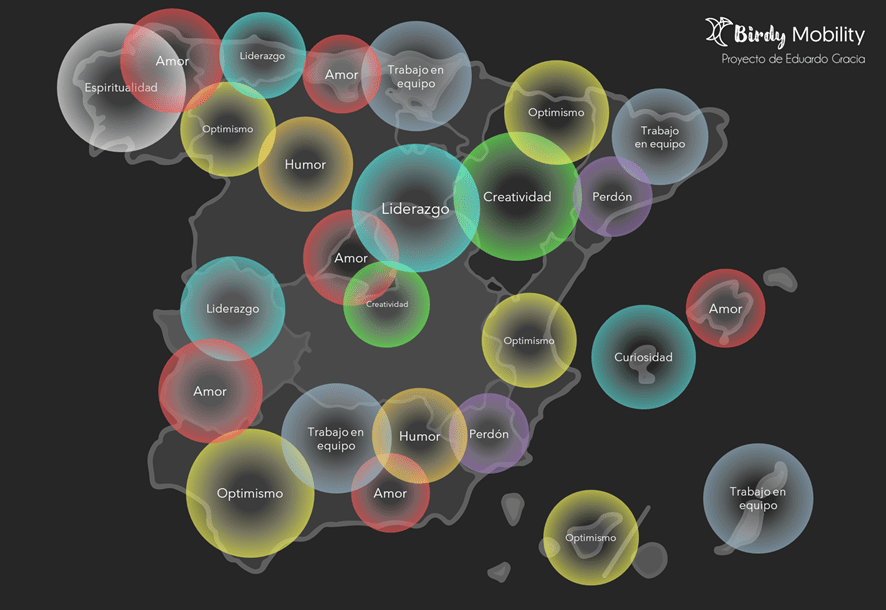
These statistics show trips taken from 00.00 to the time the user is looking at that day, people who have shared a trip with new people, number of users who say they feel happy and the «happiest» routes or strengths that most users have highlighted that they want for their day to day life. For example, this is the map of Spain, showing the strengths that the users have picked in each community.
Vehicle-city interaction
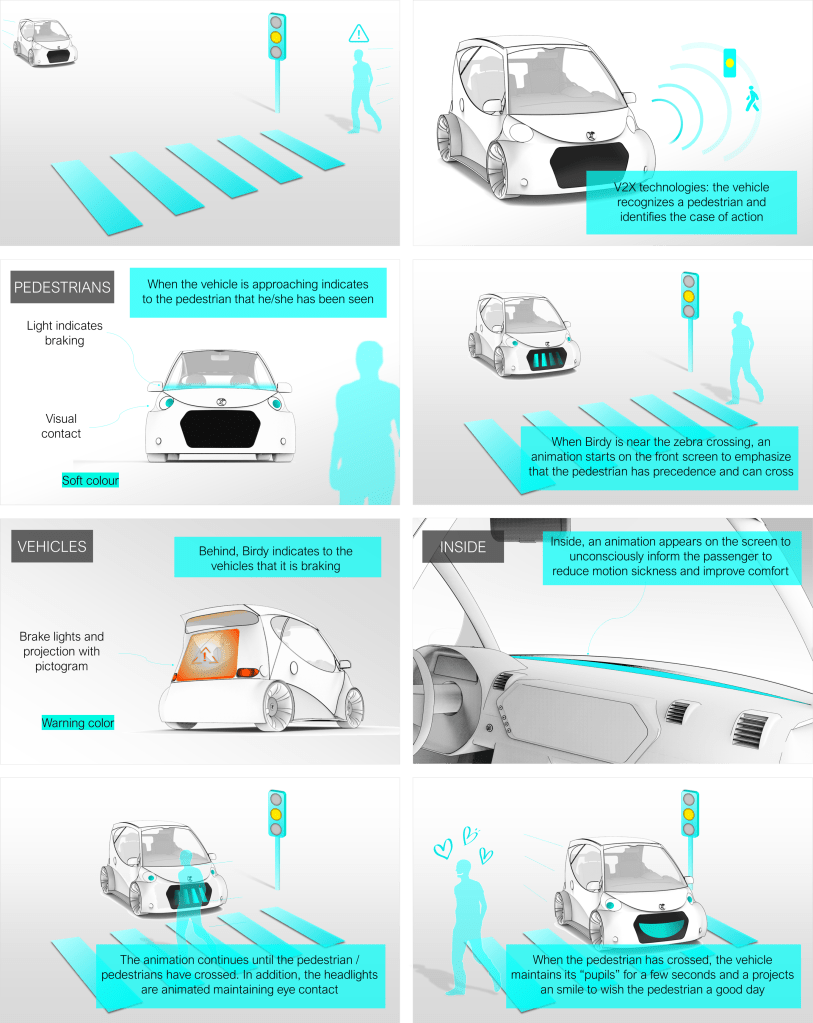
Birdy uses different types of solutions depending on the moment of action. 8 out of 10 pedestrians need visual contact with the driver before daring to cross the road. Being in autonomous mode with high degree of autonomy, the passenger may not be looking at the road which may pose a problem of understanding beyond the visual element.
The crosswalk icon has been chosen as the main element on the screen
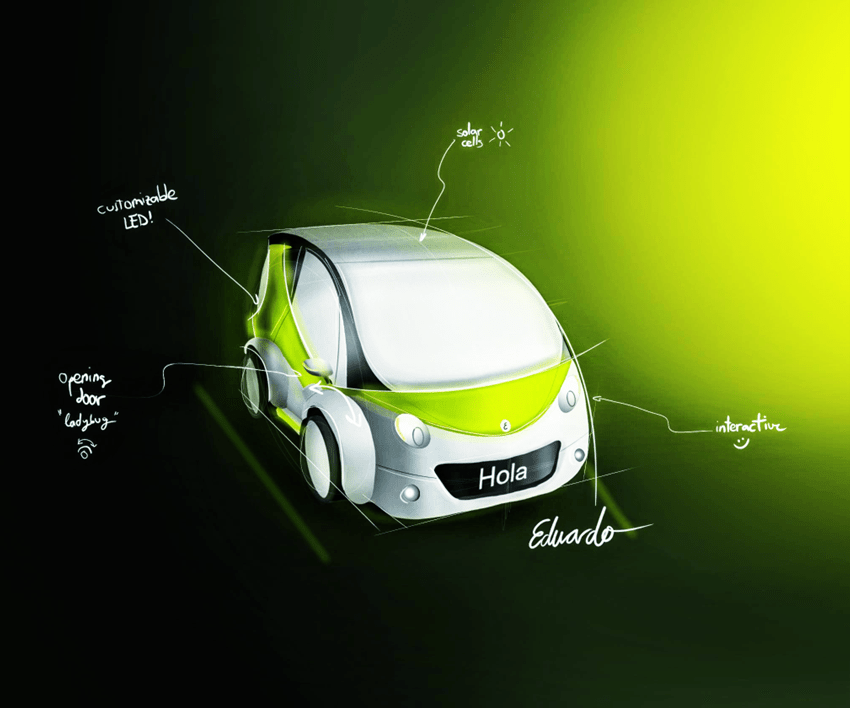
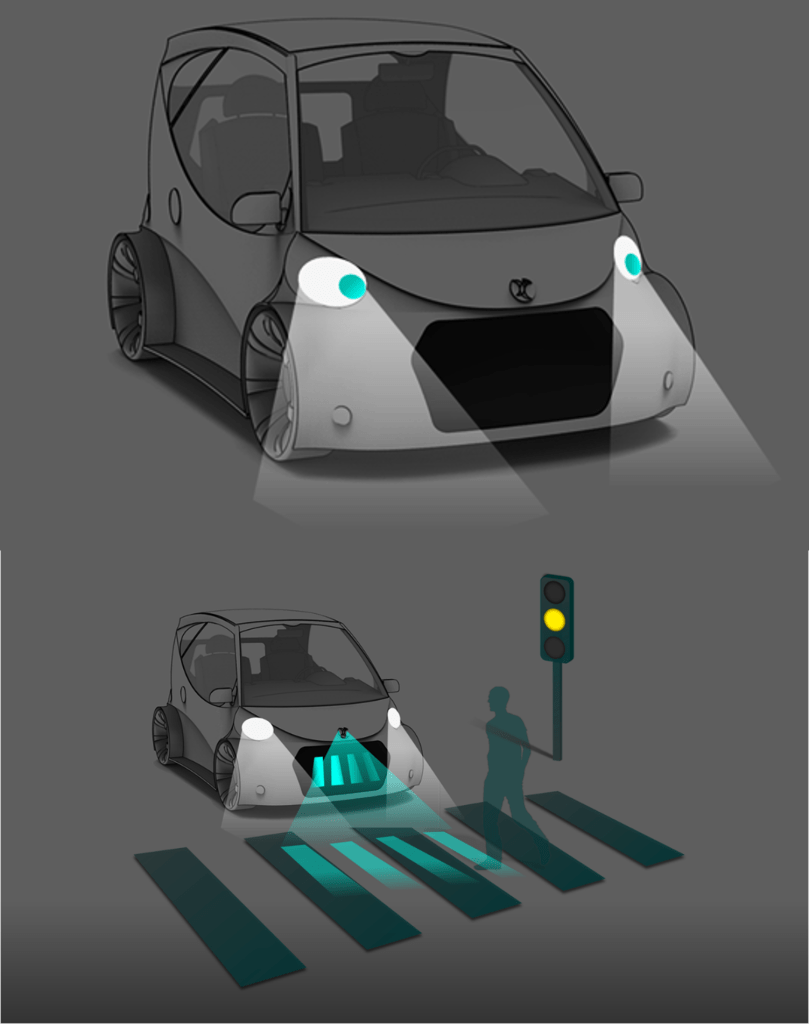
It is proposed to use the interactive headlights to make eye contact with the pedestrian and the smile once he/she has crossed to accompany him/her throughout the experience. Together with the rest of the interfaces, it fosters the fun sphere.
In situations of low light and pedestrian preference, the use of a projector under the front logo is also considered. It performs an animation similar to that of the front screen.
The Birdy vehicle is a project that brings together different disciplines and how a user-centered approach with a strong emotional design allows the development of a product that is functional, reliable, usable, fun, and transcendent.
Birdy not only wants to be your vehicle, but a friend and adventure mate.
 Eduardo Gracia